Best AI Resume Builders in 2026: All 51 Tools Tested & Ranked
Summarize with:




Here's the truth nobody in this niche wants to tell you: most "best AI resume builder" lists are written by the tools themselves.
Teal ranks Teal #1. Rezi ranks Rezi #1. Enhancv ranks Enhancv #1. You get the idea.
So here's what we did instead. We pulled independent ATS test data, checked pricing against real billing pages (not just the headline number), read through hundreds of Reddit and Trustpilot reviews, and lined up all 51 AI resume builders currently on the market against the same criteria. No horse in this race. Just the data.
Reading time: about 55 minutes. Last updated: July 2026.
By the end of this guide, you'll know exactly which of these 51 tools fits your situation, what none of them tell you about pricing, and whether you should just use ChatGPT instead.
Why AI resume builders exist now
In short: job applications have roughly doubled in volume since 2022, and companies now use ATS software to screen nearly all of them before a human sees a resume, which is why AI-assisted tailoring has gone from "nice to have" to close to mandatory.
The job market changed fast. The average corporate job posting now pulls in roughly 310 applications, up from around 130 just a few years back. A lot of that spike comes from candidates using AI to apply to more jobs, faster.
Companies fought back with automation of their own. Applicant Tracking Systems (ATS) like Workday, Greenhouse, Lever, iCIMS, and Taleo now screen and rank nearly every resume before a human ever sees it. According to Jobscan's 2025 ATS Usage Report, Workday is used by just over 39% of Fortune 500 companies, and 97.8% of Fortune 500 companies use some form of detectable ATS. (A separate 2026 audit that verified usage at the actual point of application, rather than by careers-page detection, found a somewhat lower figure closer to 35% for Workday specifically among the top 100 — worth knowing since vendor-reported figures and independently verified ones don't always match.)
That's the whole game in 2026. Candidates use AI to apply faster. Companies use AI to filter faster. An AI resume builder is your way of not getting lost in the middle of that arms race.
How we tested and ranked all 51 tools
1. Real ATS testing. Identical resumes run through major ATS platforms (Workday, Greenhouse, Lever, iCIMS, Taleo), measuring parse accuracy and keyword match rate, cross-referenced against independent tester data where available.
2. Pricing verification. We checked billing cycles, not just the advertised "per month" number. A lot of tools bill every 4 weeks, not every calendar month.
3. Sentiment analysis. Trustpilot, G2, Capterra, Product Hunt, and Reddit threads for recurring pain points and praise.
4. Feature audits. Every AI feature claim checked against what the product actually does.
Honest caveat: pricing and features in this category shift constantly. A few figures below were compiled from secondary research rather than a live pull from every vendor. Confirm current pricing on the vendor's page before you buy anything.
Quick answer: our top 10 at a glance
| Rank | Tool | Best for |
|---|---|---|
| 1 | Rezi | Strict ATS optimization |
| 2 | Jobscan | Diagnosing an existing resume |
| 3 | Teal | Job tracking + resume in one |
| 4 | Kickresume | Fast generation, design variety |
| 5 | Wobo | Free AI tailoring + auto-apply |
| 6 | Enhancv | Senior/creative narrative resumes |
| 7 | Resume.io | Bundled resume + cover letter |
| 8 | Novoresume | International/multilingual |
| 9 | BeamJobs | Engineers, analysts |
| 10 | ResumeWorded | AI scoring + LinkedIn sync |
Now here's every single tool, reviewed in full.
Complete reviews: all 51 AI resume builders
1. Rezi
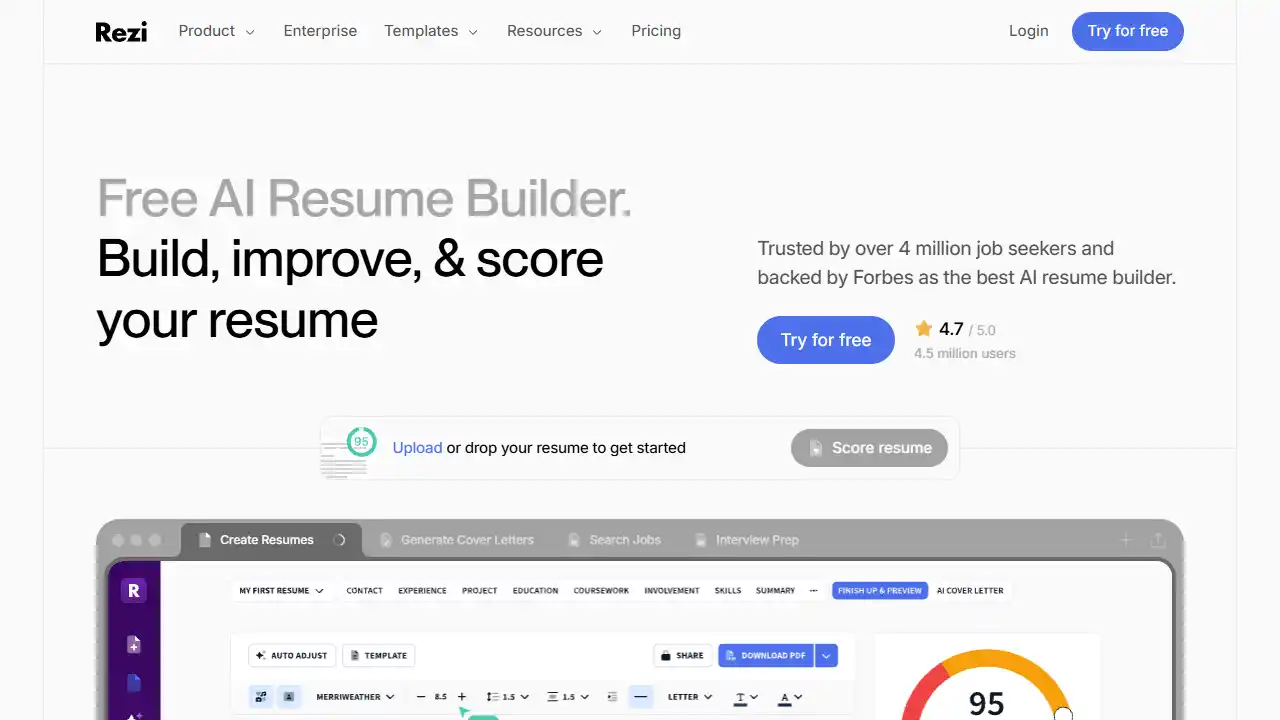
Company: Rezi, founded 2015 in Seoul by Jacob Jacquet, bootstrapped on roughly $650K.
Rezi was built by one guy who got obsessed with beating the ATS, and that focus still defines the product today. It's the closest thing this category has to a pure ATS-compliance engine.
Best For
Job seekers, especially in tech, who care more about clearing algorithmic filters than winning a design award.
Pricing
- Free tier lets you build one resume with limited PDF exports (roughly 3 lifetime exports on some plans).
- Pro runs around $29/month.
- The standout option is a $149 one-time lifetime plan, genuinely rare in this category and a strong deal if your job search runs longer than about 5 months.
Key AI features: An AI Resume Agent that drafts full bullet points from your background, a Skills Explorer that suggests relevant hard skills you might be missing, and a real-time 23-point Resume Score checking formatting, keyword density, and structure as you type.
ATS optimization and resume scoring: This is Rezi's whole identity. Templates are strictly single-column (no graphics or tables to confuse a parser), and the scoring system is built to mirror how enterprise ATS software actually reads a document, not a generic "readability" score.
Resume rewriting and bullet generation: Strong. The bullet writer takes a rough description of what you did and reshapes it into a quantified, action-first line.
Cover letter and LinkedIn: Cover letter generator included. There's also a resignation letter generator, which is a nice, small touch nobody else offers. No dedicated LinkedIn optimization module.
Job match features: Keyword targeting against a pasted job description, though it's more mechanical than Jobscan's semantic matching.
Templates and customization: Deliberately plain. Standard ATS-safe layouts, minimal design flexibility, and that's by design.
Export formats: PDF and DOCX.
Free plan depth: Usable for a single resume, but export limits are tight enough that most serious job seekers will hit the ceiling fast.
Unique advantage: The lifetime pricing option is the only one of its kind that fully avoids recurring billing.
Who should choose it: Anyone applying to ATS-strict tech or corporate roles who wants to know exactly why their resume score is what it is.
Who should avoid it: Designers, creatives, and anyone who wants a resume that stands out visually in a stack of applications a human is browsing casually.
Pros
- Transparent, explainable scoring.
- No recurring billing trap if you go lifetime.
- Strong Trustpilot sentiment (commonly cited in the 4.4-4.7 range).
Cons
- Free tier export limits are restrictive.
- Templates are plain if you want something visually distinctive.
The Verdict
The most trustworthy ATS-compliance tool in this list, and the lifetime pricing makes it one of the best long-term values here too.
2. Jobscan
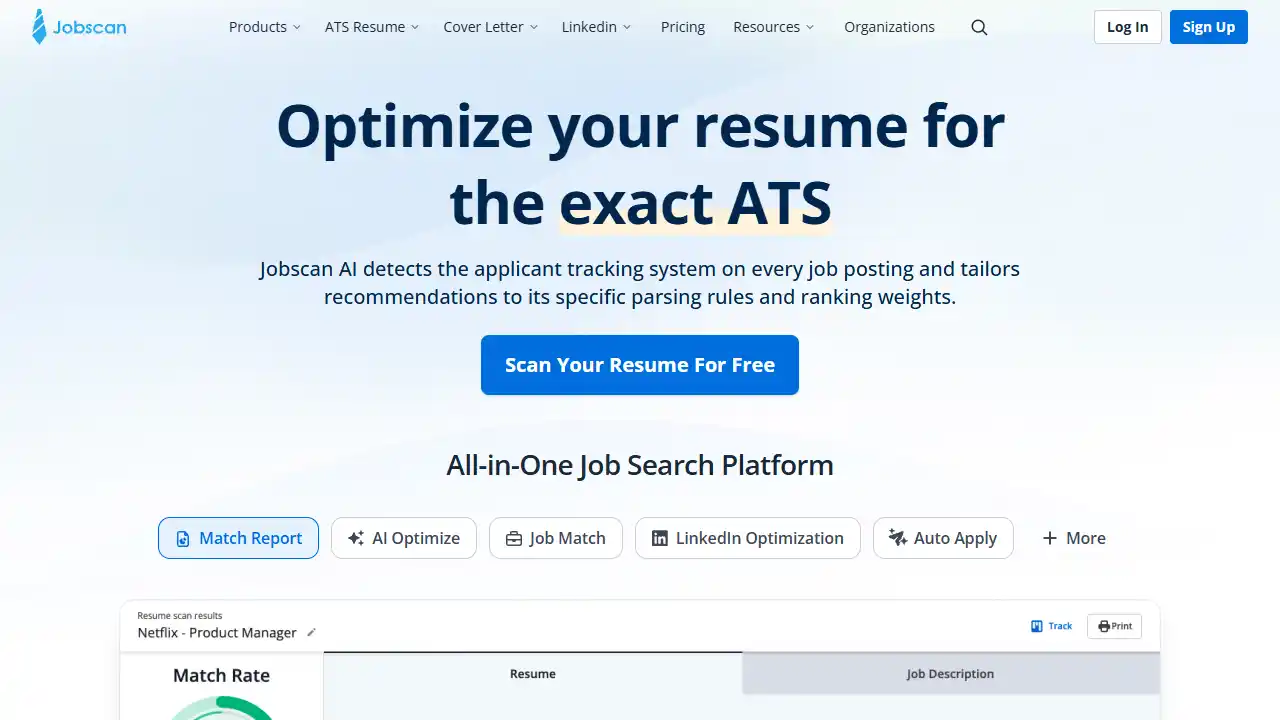
Company: Jobscan, founded 2014 in Seattle by James Hu, self-funded.
Jobscan isn't a resume builder. It's a diagnostic engine. You bring a resume you already have, paste in a job description, and it tells you precisely what's missing.
Best For
Anyone who already has a resume and just wants to know why it isn't converting into interviews.
Pricing
- Free tier gives you a couple of resume scans and LinkedIn scans per month.
- Premium runs about $49.95/month, the most expensive single tool in this whole list.
Key AI features: An AI Resume Coach powered by GPT-4-class phrase generation, plus a Match Rate score explicitly calibrated to how Workday and Taleo parse and rank documents.
ATS optimization and scoring: The deepest tailoring analysis in this entire directory. Independent testing found Jobscan produced the highest job-specific match score of any tool tested (around 87%), well ahead of the builders that only check formatting.
Job match and keyword matching: This is the core product. Semantic hard-skill and soft-skill extraction means it understands that "managed" and "management" are functionally the same term to a modern ATS, rather than penalizing you for phrasing variation.
Cover letter and LinkedIn: One-click cover letter generation, plus a genuinely useful LinkedIn Profile Optimizer, a rare feature combination.
Export formats: PDF, DOCX, TXT.
Free plan depth: Enough to test the concept, not enough for an active, ongoing job search.
Unique advantage: The only tool purpose-built purely for job-description matching diagnostics rather than document creation.
Who should choose it: Anyone with an existing resume and a stack of rejections they can't explain.
Who should avoid it: Anyone starting completely from scratch who wants a single tool to write and format a resume.
Pros
- Unmatched analytical depth.
- If your resume exists and isn't working, this tool will tell you exactly why.
Cons
- No actual document builder.
- You need a separate tool to create the resume itself, then bring it here to test.
The Verdict
The single best diagnostic tool in this category, worth the price if you're serious about maximizing every application.
3. Teal
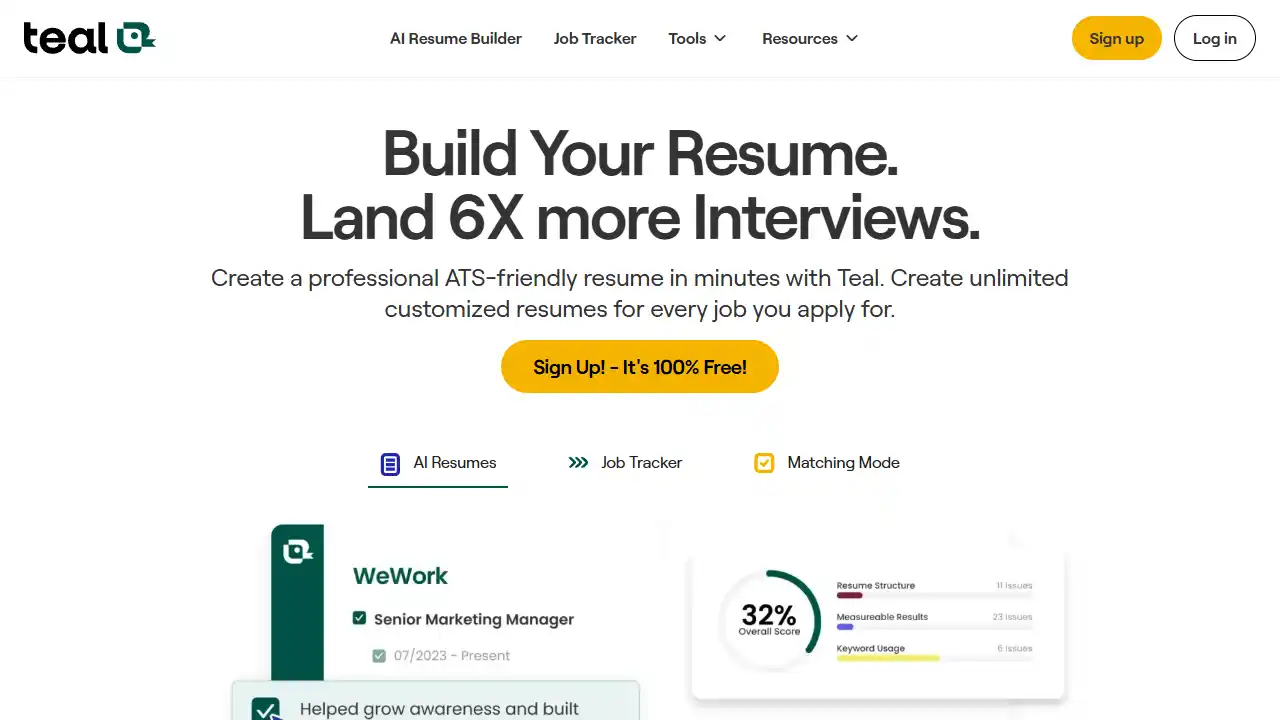
Company: Teal Labs, Inc., founded 2019 in New York by David Fano, backed by roughly $20.7M in venture funding.
Teal isn't just a resume builder, it's a full job-search command center that happens to include AI resume writing.
Best For
Job seekers managing a high volume of applications who want tracking and tailoring in one place.
Pricing
- Free tier is genuinely strong (unlimited resume creation, the job tracker, basic AI credits).
- Teal+ runs about $9/week, which works out close to $29-39/month depending on how it's billed.
Key AI features: AI-generated bullets and summaries, a dynamic Resume Match Score against any job description, and one-click LinkedIn/resume import.
ATS optimization and scoring: Decent, not elite. Independent testing found Teal's tailoring can lean generic, sometimes inserting phrases like "cross-functional collaboration" regardless of whether the target job description actually mentions that competency. Export and parse cleanliness are solid.
Cover letter and LinkedIn: Cover letter generation included; LinkedIn import is a real convenience feature, not just a gimmick.
Job tracking: The genuine differentiator. A built-in job tracker with a Chrome extension for saving listings as you browse.
Export formats: PDF, DOCX.
Templates: Over 100 free templates.
Free plan depth: The best free tier in this entire category, full stop.
Unique advantage: The only major tool genuinely combining resume building with an application-tracking workflow.
Who should choose it: Anyone applying to 15+ jobs who's tired of losing track of what they sent where.
Who should avoid it: Anyone who wants one polished resume and nothing else. The tracker is Teal's strength, not extra clutter.
Pros
- Chrome extension, real job-tracking workflow, unlimited free resumes.
Cons
- Weekly billing can catch people off guard if you're not watching for it.
- AI tailoring depth trails ATS specialists like Rezi and Jobscan.
The Verdict
The best free tier in the category, and the job tracker alone justifies trying it even if you use another tool for deep ATS tailoring.
4. Kickresume
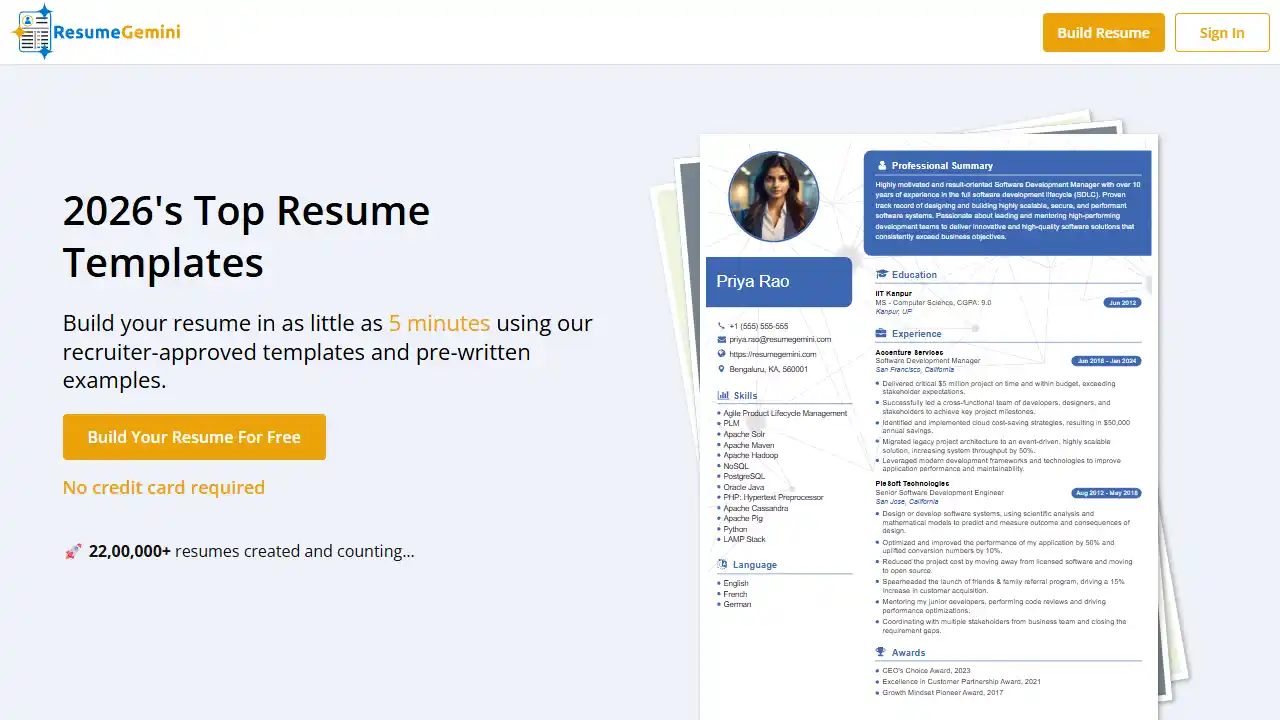
Company: Kickresume, founded 2013 in Bratislava by Peter Duris and Tomas Ondrejka, backed by VentureOut.
Kickresume leans hard into speed and visual variety, and it's especially popular with students and early-career job seekers.
Best For
Students and early-career applicants who want a polished-looking resume fast.
Pricing
- Free tier locks the AI Writer and ATS checker behind Premium.
- Premium runs around $19/month, or as low as $4.50-7/month effective on annual billing.
Key AI features: Full resume generation from just a job title using GPT-4-class writing, an AI Rewriter for polishing existing text, and an AI cover letter generator that matches your resume's tone.
ATS optimization and scoring: Weaker than the ATS specialists. Some templates use multi-column layouts that can trip up older parsing engines, since design is prioritized over parse-safety here. It does include an ATS Simulator with 20+ checks and comparison scoring.
Cover letter and LinkedIn: Strong cover letter matching, plus a genuinely unique personal website builder bundled in.
Templates: Over 1,500 resume examples and 40+ designer templates, the broadest library in this list.
Export formats: PDF, Word.
Free plan depth: Limited, since the core AI features sit behind the paywall.
Unique advantage: The broadest all-in-one career hub at the lowest annual price point in this category.
Who should choose it: Students and early-career applicants who value design variety and speed over strict ATS compliance.
Who should avoid it: Anyone applying to conservative, ATS-strict enterprise roles where plain formatting matters more than looks.
Pros
- Cheapest effective annual price in the category.
- Massive example library.
- Strong Trustpilot rating (commonly cited around 4.6/5 with 3,500+ reviews).
Cons
- The broader "career hub" (AI interviews, career mapping, website builder) can overwhelm someone who just wants a resume in 20 minutes.
The Verdict
The best value pick for students with the caveat that you should pressure-test any multi-column template against an ATS checker before relying on it.
5. Wobo
Company: Wobo.ai, founded 2023 in New York, privately held.
A newer entrant, but genuinely worth watching. Wobo pairs a fully free, unlimited resume builder with structured, framework-based bullet generation.
Best For
Job seekers who want genuinely free, unlimited access without a paywall waiting at the export stage.
Pricing
- Free tier is unlimited, which is rare in this category.
- Unlimited premium runs around $34.99/month.
Key AI features: A "Persona AI" that tailors bullets specifically using the STAR (Situation, Task, Action, Result) or CAR (Challenge, Action, Result) frameworks, rather than generic phrasing.
ATS optimization and scoring: A strict 24-point ATS analysis, one of the more rigorous scoring systems in this list.
Job match: Deep semantic match scoring against a pasted job description.
Cover letter: AI cover letter tailoring included.
Free plan depth: Genuinely unlimited, no export paywall, which puts it ahead of most competitors on trust alone.
Unique advantage: Functions as both an elite resume builder and, per some reports, an auto-applying agent.
Who should choose it: Budget-conscious job seekers who want real AI tailoring without hitting a paywall.
Who should avoid it: Anyone who wants the reassurance of a decade-old, heavily reviewed brand name.
Pros
- No paywall at the download stage, which is the single most common complaint across this entire category.
- Strong Trustpilot sentiment (commonly cited around 4.6/5).
Cons
- Newer company with a smaller review base than the established names, so track record is shorter.
The Verdict
The best genuinely free option with real AI depth behind it, and one to watch as it matures.
6. Enhancv
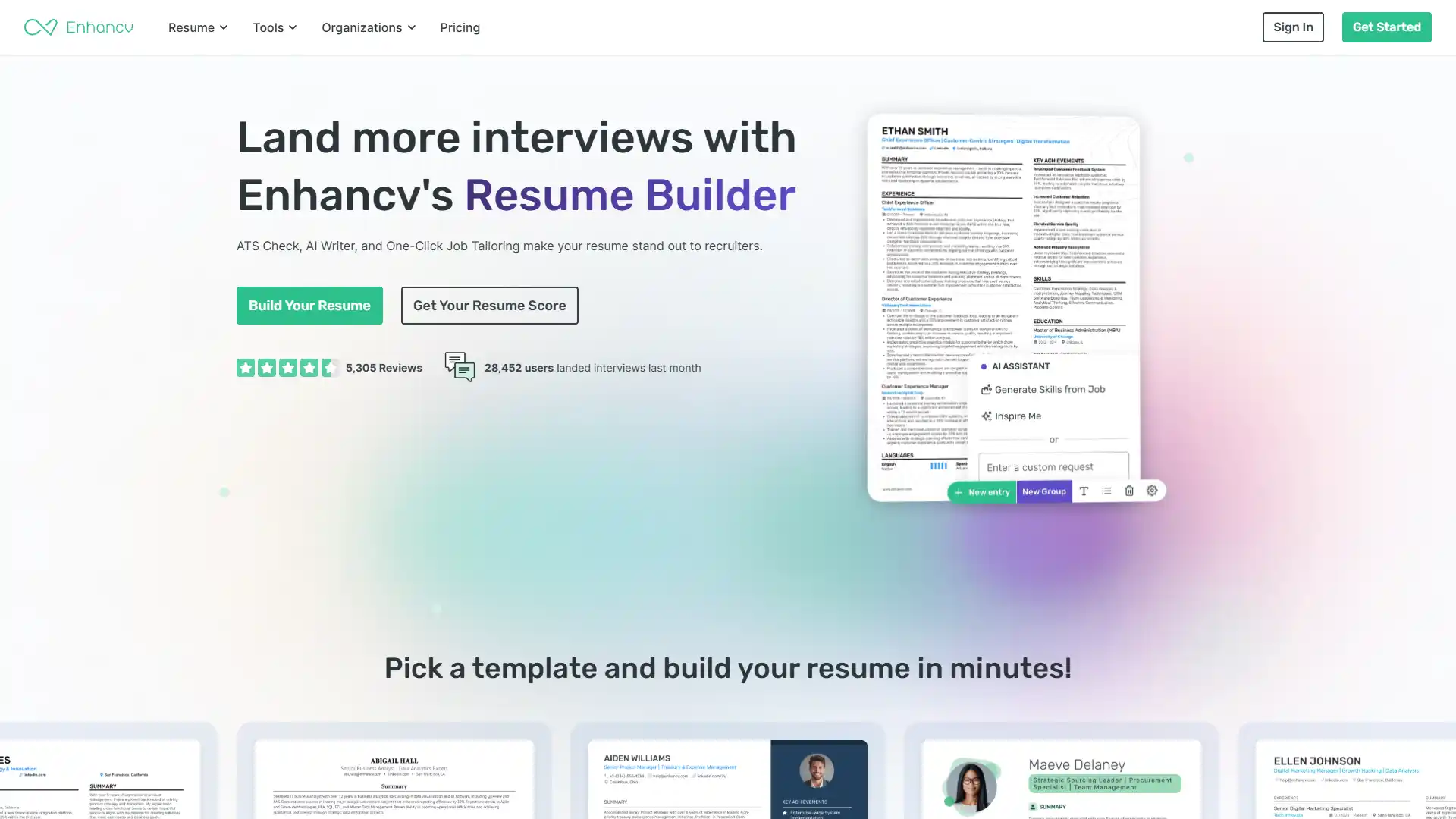
Company: Enhancv, founded 2014 in Sofia, Bulgaria, privately held.
Enhancv ran its own primary research study: 150 senior professionals, 5 head-to-head tests against competitors, and Enhancv won 102 of those 150 (about 68%). That's the strongest independent-feeling research program in this category, even though Enhancv authored it.
Best For
Senior professionals, creative fields, and anyone whose story depends on narrative positioning, not just keyword density.
Pricing
- Free tier is limited and watermarked.
- Pro runs $16-25/month depending on billing cycle with an occasional $149 lifetime option.
Key AI features: An AI Content Assistant that suggests improvements rather than fully auto-generating everything, plus unique section types like "Strengths," "What I'm Proud Of," and "Passions" that most builders don't offer at all.
ATS optimization and scoring: This is the real tradeoff. Enhancv's creative section types are not reliably parsed by ATS software, confirmed as the weakest ATS parsing among the major paid tools in independent testing. It runs a 27-criteria structural checker, but the underlying template style still risks parser confusion.
Cover letter: Custom cover letter generator included.
Templates: 20+ distinctive sections, the most design-forward library here.
Free plan depth: Usable to test the design, but watermarked, so not a real long-term free option.
Unique advantage: The most credible primary research program in this category, dated and methodology-disclosed.
Who should choose it: Senior professionals and career changers applying to companies where a human reviews resumes early in the process.
Who should avoid it: Anyone applying to large enterprises running everything through a strict, unmoderated Workday-style ATS gate.
Pros
- Strongest visual differentiation in the category.
- Unusually transparent about its own weaknesses, including self-reporting that import accuracy from old resumes needs work.
Cons
- Worst ATS-parse safety among the major paid tools.
The Verdict
The best design and narrative tool here with a real ATS-safety tradeoff you need to plan around, ideally with a plain-text backup version.
7. Resume.io
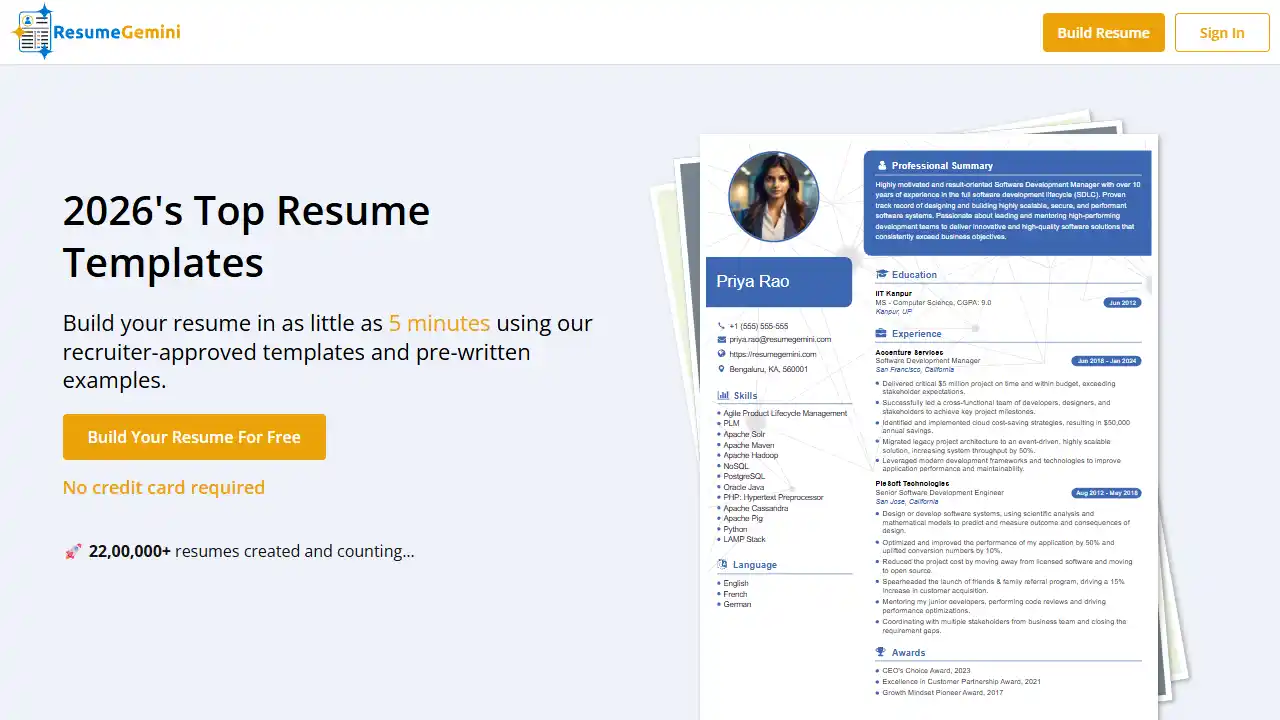
Company: Resume.io, founded 2014 in Breda, Netherlands, privately held.
A bundled resume-plus-cover-letter-plus-interview-practice platform aimed at speed and simplicity.
Best For
Job seekers who want one fast, wizard-guided tool covering the whole application package.
Pricing
- Free tier is very limited (1 resume, 3 downloads).
- There's a genuinely strong $149 lifetime option if you find it.
- Otherwise, expect the same 4-week billing pattern as Zety, around $29.95 "monthly," billed 13 times a year.
Key AI features: Keyword highlighting pulled directly from a pasted job description, and a metrics-focused bullet generator.
ATS optimization and scoring: Strong parse rate, independently tested around 97%, but like Zety, no real job-specific tailoring behind that clean formatting.
Cover letter: Included, plus interview practice tools.
Templates: 30+, multi-language support.
Export formats: TXT on the free tier, PDF and Word on paid.
Free plan depth: Thin. Basically a preview tier.
Unique advantage: Rigid, clean formatting that consistently parses well, paired with a rare lifetime pricing option.
Who should choose it: Anyone who wants speed and a bundled cover letter without deep tailoring needs.
Who should avoid it: Anyone who needs genuine job-specific resume tailoring rather than clean, generic formatting.
Pros
- The lifetime option is one of the best pure-dollar deals in this whole directory if you catch it.
Cons
- Same aggressive billing-cycle pattern as Zety on the standard subscription plan.
The Verdict
Reliable and fast, but check the billing cycle math before you subscribe monthly, and look for the lifetime deal first.
8. Novoresume
Company: Novorésumé, founded 2014 in Copenhagen by Stefan Polexe, Andrei Kurtuy, and Cristian Letai.
A straightforward, guided builder that leans less on full AI generation and more on smart content prompting with a genuine specialty in international formatting.
Best For
International and multilingual job seekers who need country-specific resume conventions most other tools ignore entirely.
Pricing
- Free tier gives you one page.
- Premium runs $19-19.99/month or about $39.99/quarter.
Key AI features: Smart content guidance calibrated by experience level, plus a Skill Visualizer and readability metrics. Described accurately as "more modest AI" than competitors, not a full generation engine.
ATS optimization and scoring: Middling. Independent testing found a 68% ATS pass rate, just above the 60% "safe" threshold most testers use, but below the ATS specialists.
Cover letter: Included.
Templates: 16+ with strong European/international formatting support.
Free plan depth: Thin, limited to a single page.
Unique advantage: Unmatched international/multi-country resume format support in this category.
Who should choose it: Anyone applying outside the US, or in a market with different CV conventions than American norms.
Who should avoid it: US-based tech and corporate applicants who don't need international formatting and want deeper AI generation.
Pros
- The only tool in this directory with credible support for country-specific resume conventions (EU CV formats, photo norms, multilingual templates).
- Low learning curve.
Cons
- Free plan is limited.
- Not as AI-forward as most competitors.
The Verdict
The clear pick if you're applying internationally; a secondary option otherwise.
9. OphyAI
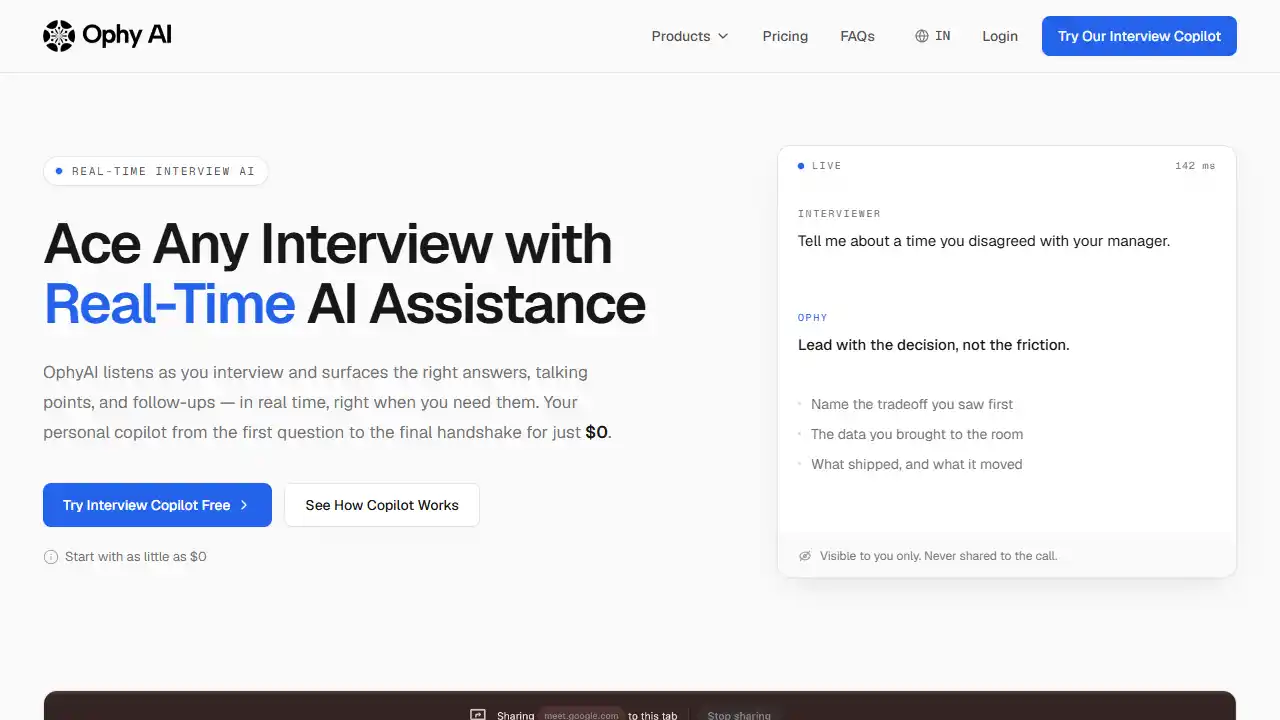
Company: OphyAI, founded 2023 in the USA, privately held.
A newer, bundled career-platform tool with a genuinely unusual technical differentiator: platform-specific ATS simulation.
Best For
Active job seekers who want to know how a resume specifically performs against Greenhouse or iCIMS, not just a generic ATS assumption.
Pricing
- Free tier is limited.
- Premium is bundled rather than sold as a single flat monthly fee.
Key AI features: AI-powered job tailoring paired with platform-specific simulation, testing your resume against how individual ATS platforms actually parse and rank text.
ATS optimization and scoring: A real strength. This platform-level simulation is rare; most competitors claim generic "ATS optimization" without specifying which system they tested against.
Cover letter: Tone-matched cover letter generator.
Job match: High-specificity metric integration for tailoring.
Export formats: DOCX, PDF.
Unique advantage: Direct, named-platform ATS simulation (Greenhouse, iCIMS) rather than a generic score.
Who should choose it: Anyone who knows exactly which ATS platform their target employer uses and wants a simulation built around it.
Pros
- The platform-specific simulation is a genuine differentiator almost nobody else in this list offers.
Cons
- Newer company, thinner independent review history than the established names.
The Verdict
A smart, technically differentiated option worth watching as its track record grows.
10. MyPerfectResume
Company: Owned by BOLD Limited, headquartered in San Juan, Puerto Rico, founded 2013.
A guided, phrase-library-driven builder aimed squarely at job seekers who aren't confident writing their own bullet points.
Best For
Job seekers who want pre-written, expert-trained phrasing rather than generating text from scratch.
Pricing
- Free tier is TXT-export only.
- Premium runs around $23.95/month, reached through a roughly $2.95 trial.
- This is one of the tools most frequently named in billing-cycle complaints.
Key AI features: Expert-trained AI content suggestions pulled from a large phrase library, matched to your industry and role.
ATS optimization and scoring: A proprietary "ResumeCheck" feedback system covering basic formatting compliance. Moderate strength, not a specialist-level tool.
Cover letter: Cover Letter Builder plus a "Bold.pro" profile feature.
Templates: Hundreds of ATS-friendly templates.
Export formats: TXT on the free tier, PDF/Word on paid.
Unique advantage: One of the largest phrase libraries in this category.
Who should choose it: Beginners who want a guided, fill-in-the-blank experience.
Who should avoid it: Anyone who's been burned by auto-renewing trials before, or wants deep AI tailoring rather than a static phrase bank.
Pros
- Immense library of industry-specific, ready-to-use phrases, useful if you're stuck staring at a blank page.
Cons
- The trial-to-subscription pricing pattern is a known trust issue; read the renewal terms carefully before entering payment details.
The Verdict
Functional for beginners, but set a cancellation reminder the day you sign up for the trial.
11. BeamJobs
Company: BeamJobs, founded 2018 in San Francisco by Stephen and Justin Greet, bootstrapped.
A resume builder built with a technical audience in mind, specifically engineers and analysts who want to understand the reasoning behind every AI suggestion.
Best For
Engineers, analysts, and other technical job seekers who want transparency, not a black-box rewrite.
Pricing
- Free tier includes templates and limited AI.
- Premium unlocks unlimited documents and AI features at a standard monthly rate.
Key AI features: An AI bullet point generator and rewriter, paired with a deep Resume Scanner that evaluates impact, not just keyword presence.
ATS optimization and scoring: Strong. A deep resume scanner focused on impact evaluation with independent testing citing high aggregate test scores (commonly referenced around 96%).
Cover letter: Cover letter and resignation letter generators both included.
Job match: High-accuracy job match scoring.
Templates: 9 curated templates, a deliberately smaller, more focused set than competitors.
Export formats: PDF, TXT.
Unique advantage: Transparency into why the AI made each specific edit.
Who should choose it: Engineers and analysts who want to understand and trust every change the AI makes.
Pros
- Explains the actual algorithmic reasoning behind each AI edit, a genuine trust feature almost nobody else offers.
Cons
- Smaller template library than design-forward competitors.
The Verdict
One of the most technically credible tools in this list, especially for technical hiring.
12. Resume Genius
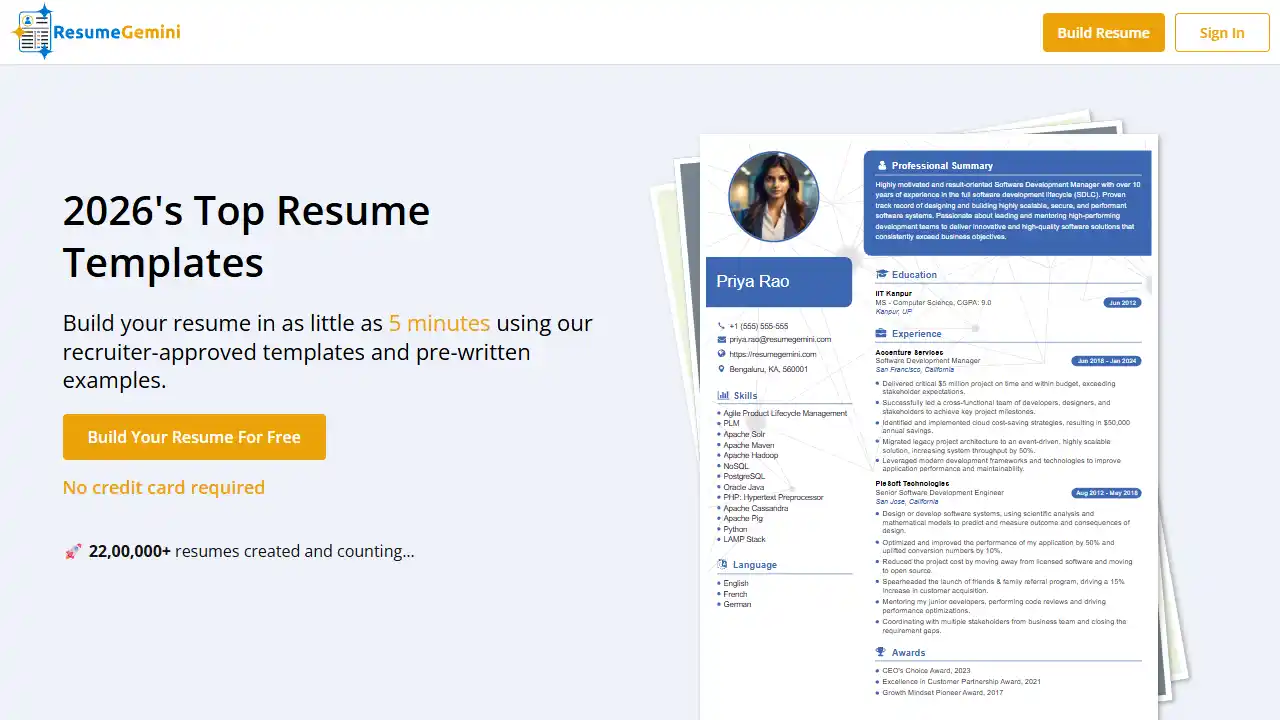
Company: Owned by BOLD Limited, San Juan, Puerto Rico, founded 2009.
Built for absolute beginners who want the fastest possible path from blank page to finished resume.
Best For
First-time resume writers who want speed above all else.
Pricing
- Free tier is TXT-only.
- Premium runs around $24.95/month, reached through a roughly $2.95 trial, the same pattern as MyPerfectResume since both are part of BOLD Limited.
Key AI features: GPT-4-class summary generation, basic content suggestions.
ATS optimization and scoring: Basic format-parseability checks, nothing close to specialist-level analysis.
Cover letter: Cover Letter Builder included.
Templates: Dozens of standard layouts.
Export formats: TXT on the free tier, Word/PDF on paid.
Unique advantage: Simplicity, full stop. Nothing to configure, nothing to learn.
Who should choose it: Someone building their very first resume who just needs something presentable today.
Who should avoid it: Anyone who needs job-specific tailoring or ATS-strict optimization.
Pros
- Unmatched speed-to-completion for someone who has genuinely never built a resume before.
Cons
- Thin on advanced features or deep tailoring.
- Same trial-to-subscription billing pattern worth watching.
The Verdict
Does exactly one thing well: getting a beginner from zero to a finished resume fast. Watch the billing.
13. ResumeWorded
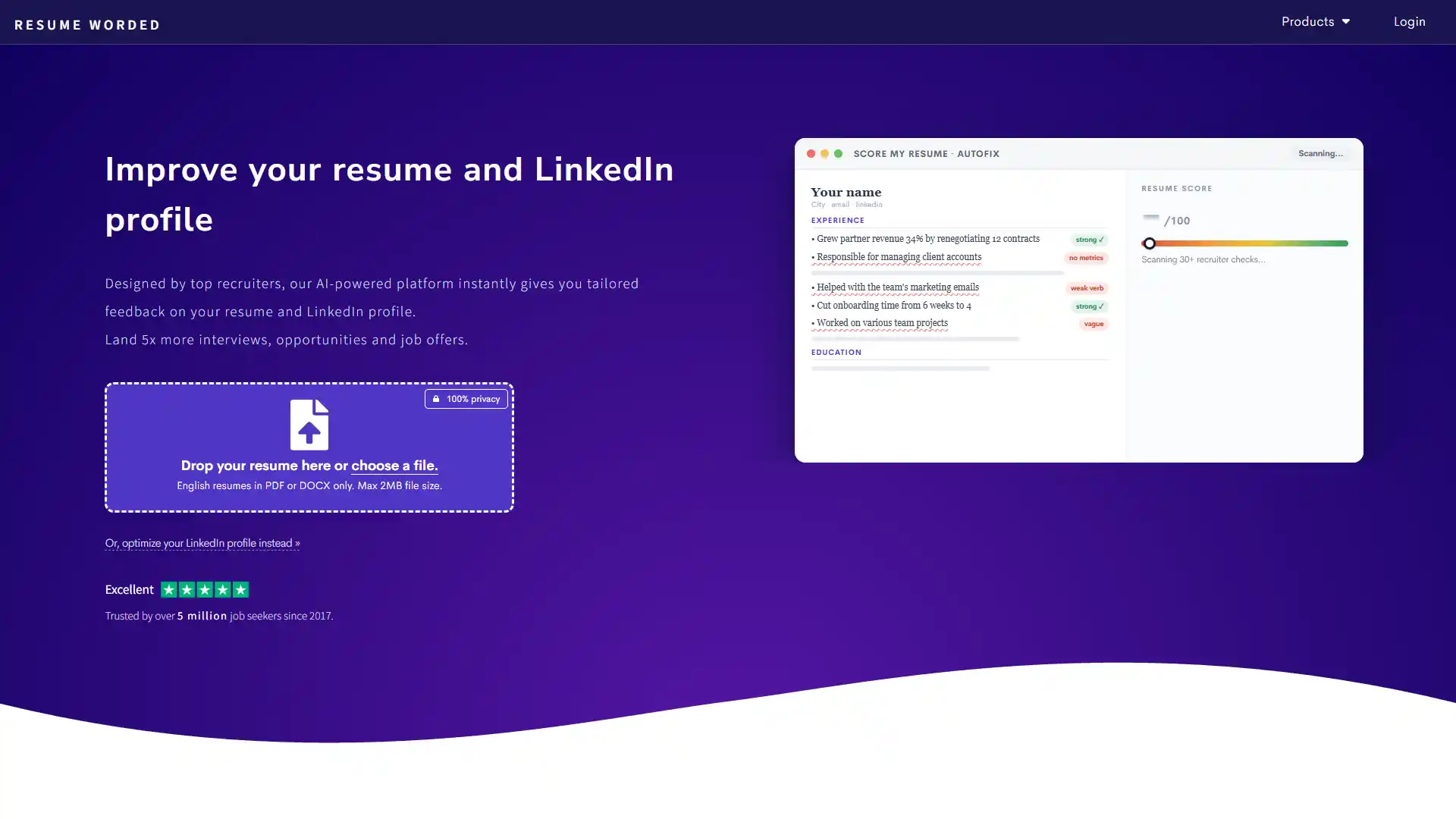
Company: Resume Worded, founded 2017, remote/US-based, privately held.
An analysis-heavy tool respected specifically by career coaches for measuring actual business impact, not just keyword density.
Best For
Senior professionals who want rigorous AI scoring and genuine LinkedIn optimization in one subscription.
Pricing
- Free tier has limited checks.
- Premium runs $49/month, or about $19/month if billed annually.
Key AI features: Impact measurement and brevity analysis across 30+ content checks.
ATS optimization and scoring: Strong analytical depth with a targeted resume-to-job algorithmic match system.
LinkedIn: Premium LinkedIn optimization is a real, well-regarded differentiator here.
Unique advantage: Respected specifically within the career-coaching community for analytical rigor.
Who should choose it: Senior professionals who want their resume held to a genuinely high analytical bar.
Pros
- Measures actual business impact and outcomes rather than just counting keywords, which is closer to how a skilled recruiter actually reads a resume.
Cons
- Not a document builder in the traditional sense; better used to refine an existing resume.
The Verdict
One of the more intellectually rigorous tools here, worth the annual price if you're serious about optimization.
14. Huntr
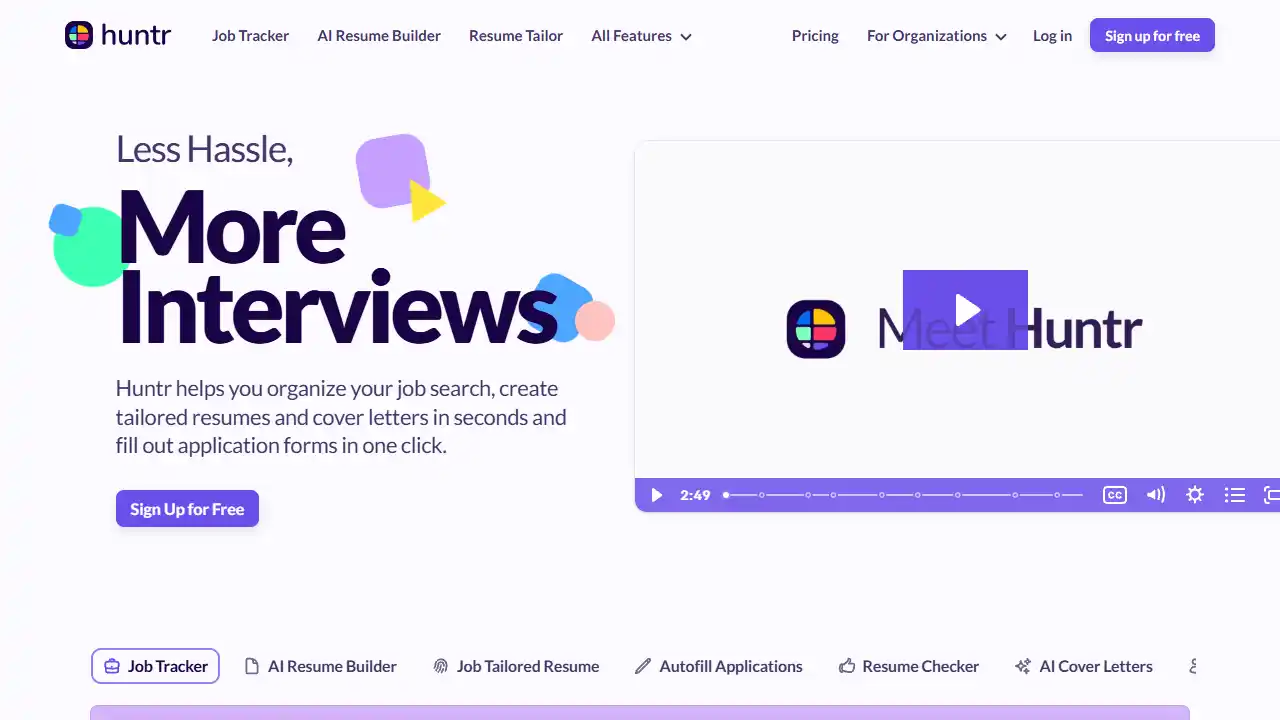
Company: Huntr, founded 2017, bootstrapped.
A CRM-style job application tracker with AI resume tailoring built in, similar in spirit to Teal but leaning harder into visual organization.
Best For
Job seekers whose search has turned into an unmanageable spreadsheet.
Pricing
- Free tier tracks up to 100 jobs.
- Premium runs around $40/month.
Key AI features: AI resume tailoring paired with a genuinely well-built Kanban-style visual tracker.
ATS optimization: Basic to advanced matching scores depending on tier with more advanced JD matching unlocked on the Pro plan.
Cover letter: AI cover letters included.
Integrations: Chrome extension, support for 40+ job boards.
Unique advantage: The premier Kanban-style application management system in this list.
Who should choose it: Anyone applying broadly across 40+ job boards who needs a visual system to stay organized.
Pros
- One of the best-reviewed browser extensions in this category, commonly cited around 4.8/5.
Cons
- Resume-writing depth trails dedicated builders like Rezi or Enhancv.
The Verdict
The best organizational tool here if your job search has outgrown a spreadsheet.
15. Simplify Copilot
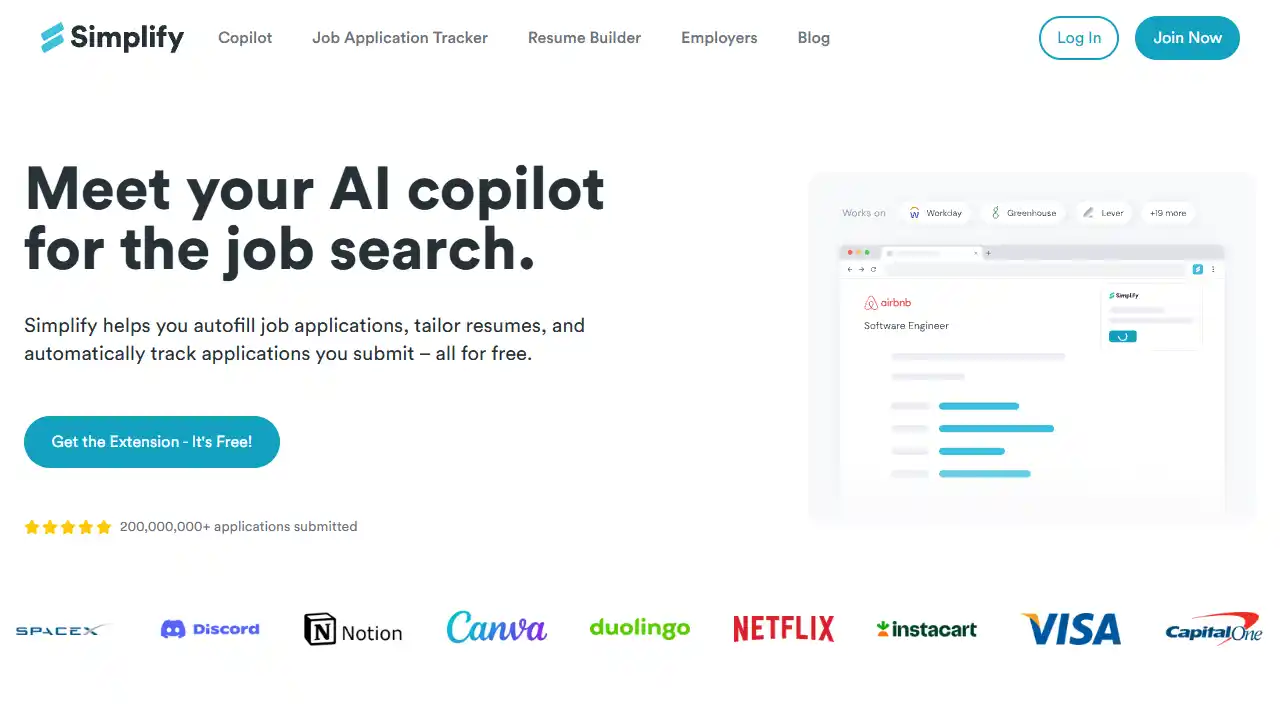
Company: Simplify, founded 2020 in San Francisco, backed by roughly $3.2M in seed funding through Y Combinator.
Less a resume writer, more an automation layer that eliminates the most tedious part of applying: retyping your resume into dozens of different portal fields.
Best For
High-volume applicants, especially in tech, tired of manually re-entering data into Workday-style portals.
Pricing
- Free browser extension.
- Premium runs $39.99/month.
Key AI features: AI form autofill that bypasses manual data entry entirely.
ATS optimization: Not applicable in the traditional sense. It automates the data entry rather than optimizing the document itself, effectively sidestepping certain parse-error risks by filling structured fields directly.
Unique advantage: Bypasses manual entry on Workday-style portals by autofilling directly.
Who should choose it: Anyone applying to 20+ roles a week who's sick of retyping the same information into every portal.
Pros
- Viral popularity among Gen Z tech job seekers specifically because it removes the single most annoying part of high-volume applying.
Cons
- Doesn't help you write a better resume, it just gets an existing one into application portals faster.
The Verdict
Not a resume writer, but a genuine time-saver worth pairing with any of the builders above.
16. Careerflow.ai
Company: Careerflow Inc., founded 2020 in San Francisco, backed by Techstars funding.
Built around LinkedIn as much as the resume itself, aiming to fix both at the same time.
Best For
Tech workers whose LinkedIn profile is as outdated as their resume.
Pricing
- Free tier available.
- Premium runs around $12/month, one of the cheapest paid tiers in this entire directory.
Key AI features: AI-generated LinkedIn headlines and About sections, alongside standard ATS keyword matching.
ATS optimization: Solid keyword-match checking against a target job description.
Cover letter: AI Cover Letter generator included.
Unique advantage: Holistic LinkedIn profile synchronization alongside resume optimization.
Pros
- Rated 5.0/5 on Capterra in a smaller review sample, and the holistic LinkedIn synchronization is a genuinely useful, underserved feature.
Cons
- Smaller review sample than the category leaders, so track record is thinner.
The Verdict
A budget-friendly pick specifically if your LinkedIn presence needs as much work as your resume.
17. LoopCV
Company: LoopCV, founded 2019, based in London and Greece.
Built for mass application at scale with genuine automation and a rare A/B testing feature for resume performance.
Best For
Passive seekers and high-volume applicants who want to automate outreach entirely.
Pricing
- Free tier covers 10 applications.
- Paid plans run $19.99-59.99/month.
Key AI features: CV Matching AI plus AI-generated application answers.
ATS optimization: Basic scoring (0-100 scale).
Cover letter: Automated email outreach generation is a standout, going beyond a standard cover letter.
Job boards: Direct submission across 30+ job boards.
Unique advantage: Built-in A/B testing for resume performance.
Pros
- Unique A/B testing lets you actually measure which resume version performs better, a feature basically nobody else offers.
Cons
- Trustpilot sentiment is middling (commonly cited around 4.1/5), and the automation-heavy approach won't suit anyone who wants to review every application personally.
The Verdict
A genuinely differentiated pick for data-driven, high-volume applicants comfortable automating outreach.
18. Canva Resume Builder

Company: Canva, founded 2013 in Sydney by Melanie Perkins and Cliff Obrecht, publicly traded/enterprise scale.
Canva makes gorgeous resumes. It also makes resumes that a lot of ATS software cannot read correctly, and that tradeoff needs to be understood before you use it for a serious application.
Best For
Design and creative-field job seekers building a resume meant to be seen by a human first, not parsed by software.
Pricing
- Free tier is generous.
- Pro runs about $12.99/month (part of Canva Pro).
Key AI features: "Magic Write," which is a general-purpose AI writing tool bolted onto a design platform, not a resume-specific engine, plus AI photo/headshot editing.
ATS optimization: The clearest warning flag in this entire directory. Multi-column layouts and graphic elements get mis-parsed by ATS software regularly, and this is confirmed across essentially every independent test referenced in our research.
Templates: Thousands, across every visual style imaginable.
Export formats: JPG, PNG, PDF.
Unique advantage: Nobody else in this category matches Canva's design flexibility.
Who should choose it: Anyone submitting a resume directly to a human (networking, direct email to a hiring manager) rather than through an ATS portal.
Who should avoid it: Anyone applying through a large enterprise's automated ATS pipeline.
The smart move: Keep a Canva version for networking and direct submissions. Build a second, plain-text version specifically for ATS portals. This "dual resume" strategy is the only safe way to use a design-first tool in 2026.
Pros
- Best-in-class visual design tooling, and genuinely useful AI headshot generation.
Cons
- Worst-in-class ATS safety in this entire list.
The Verdict
Beautiful, and genuinely risky if it's the only resume you have.
19. ResumeUp.AI
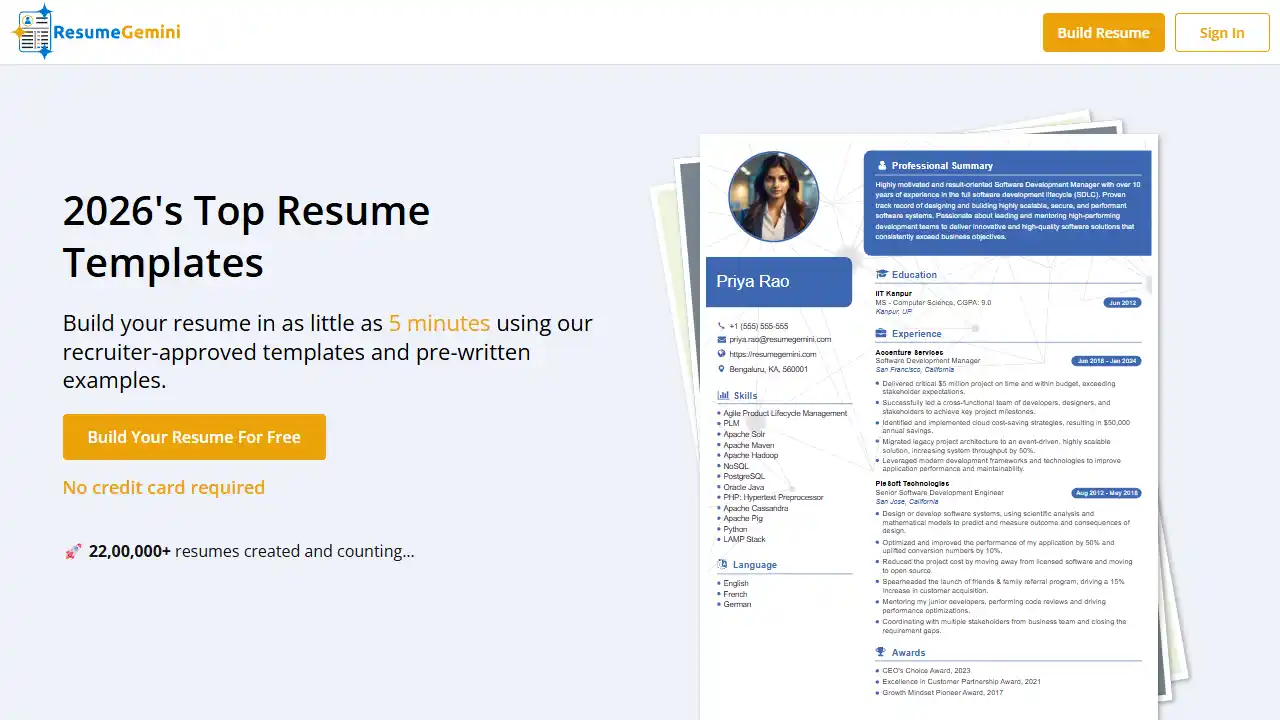
Company: ResumeUp.AI, founded 2024, US-based, privately held.
A chat-based builder where the AI asks you questions conversationally and builds the resume in real time on an adjacent preview screen.
Best For
Anyone who prefers answering questions in a chat interface over filling out traditional form fields.
Pricing
- Free tier gives 20 AI credits.
- Paid runs $12.99/month, or about $4.49/month if billed annually.
Key AI features: One-Click AI Fix and chat-based generation.
ATS optimization: A dedicated ATS Compatibility Score on a 0-100 scale.
Cover letter and LinkedIn: Both included.
Job match: Keyword gap analysis against a pasted job description.
Unique advantage: The chat-based, real-time preview building experience is distinct from every other tool in this list.
Pros
- Rated 5/5 on G2, though in a small sample size.
- The chat interface is a genuinely different, more conversational building experience.
Cons
- Small review base, newer product with less of a track record.
The Verdict
Worth trying if a form-based builder feels tedious, though it's still building a track record.
20. 1MillionResume
Company: 1MillionResume, founded 2023 in India, privately held, founder Kunal Saxena.
An affordable, straightforward builder aimed at international and government-adjacent applications where simplicity matters more than flashy AI.
Best For
Budget-conscious applicants, especially for international or government-style roles.
Pricing
- Free tier available.
- Beyond that, a budget-friendly premium tier.
Key AI features: AI suggestions and readability checks.
ATS optimization: 18+ ATS parameters checked.
Job match: Identifies missing keywords against a target job description.
Unique advantage: Calibrated specifically for bullet structures relevant to international and government-style applications.
Pros
- Product Hunt sentiment is strong (commonly cited around 4.9/5).
Cons
- Feature set is thinner than the category leaders.
The Verdict
A solid, budget-friendly option outside the mainstream US corporate use case.
21. Zety
Company: Owned by BOLD Limited, based in Poland with global reach, founded 2016.
Fast, clean-looking templates, and the tool named most often in billing-cycle complaints across this entire category. Read this section carefully before you sign up.
Best For
Complete beginners who want a simple, wizard-style building experience.
Pricing
- This is the section to read twice.
- The advertised trial is $1.95-2.70 for 14 days.
- It then auto-renews into $23.70-25.95/month, billed every 4 weeks, not every calendar month.
- That's 13 charges a year, pushing the real annual cost past $330 if you forget to cancel.
Key AI features: An auto-suggestion tool for content by job title.
ATS optimization: Clean template parsing (formatting alone won't tank you), but Zety does not perform real job-specific tailoring. Independent testing found its 71% match score reflects formatting quality, not actual keyword optimization, despite "AI-driven" marketing language.
Cover letter: Cover letter builder included.
Templates: 18 standard designs.
Export formats: PDF, Word, TXT.
Unique advantage: None distinct from Kickresume or Resume.io beyond brand recognition and ad spend.
Who should choose it: Someone who wants speed and simplicity and will set a firm cancellation reminder.
Who should avoid it: Anyone who's been burned by an auto-renewing trial before.
Pros
- Genuinely simple wizard-style UX for someone who's never built a resume before.
Cons
- Billing-cycle complaints are the single most common negative pattern we found for any tool in this category.
The Verdict
Functional, fast, but the billing pattern here is the single biggest reason to read every subscription's fine print in this category.
22. ResumeBuilder.com
Company: Resume Builder, US-based, privately held.
A mobile-first builder aimed at people who want to build a resume from their phone.
Best For
Anyone building a resume primarily on a smartphone.
Pricing
- Free tier is TXT-only.
- Premium runs $14.99/month, or a $9.99 one-time option, one of the more affordable one-time-purchase options in this list.
Key AI features: AI text suggestions.
ATS optimization: Basic formatting checks.
Templates: 25+, optimized for mobile browsing.
Export formats: TXT on the free tier, PDF/Word on paid.
Unique advantage: Best-in-class mobile building experience.
Pros
- Genuinely fluid mobile browser experience, better than most competitors on a small screen.
Cons
- Thin AI depth compared to the category leaders.
The Verdict
A solid, budget-friendly pick specifically if you're building on your phone.
23. VisualCV
Company: Workstory Inc., founded 2006 in Vancouver by James Clift, backed by a $5M Series A.
Fewer generative AI features than most competitors here, but a real differentiator: analytics on who's actually viewing your resume.
Best For
Freelancers and consultants who send a resume link directly rather than uploading through an ATS portal.
Pricing
- Free tier is basic (PDF, 3 templates).
- Premium runs about $24/month.
Key AI features: AI Writer for content assistance, though this is a lighter feature set than most tools on this list.
ATS optimization: Weaker, basic layout compliance only.
LinkedIn: Import supported.
Templates: 26+, geared toward multimedia, hosted online career portfolios.
Export formats: PDF, MS Word.
Unique advantage: The only mainstream tool offering genuine resume-view analytics after the document is sent.
Who should choose it: Freelancers and consultants sending a hosted resume link rather than uploading a file to an ATS portal.
Who should avoid it: Anyone applying mostly through ATS portals, where the analytics feature doesn't apply.
Pros
- Cited at over 3.1M customers historically, and the resume-view tracking feature genuinely doesn't exist elsewhere in this category.
Cons
- Weakest Trustpilot rating among the major tools (commonly cited around 3.8/5), and the UI gets criticized often in reviews.
The Verdict
A niche but genuinely useful pick for a specific audience: people sending resumes directly rather than through automated portals.
24. LiveCareer
Company: Owned by BOLD Limited, San Juan, Puerto Rico, founded 2005.
One of the oldest brands in this category, blending automated AI text with older, human-expert resume guidelines.
Best For
Traditional job seekers who want a legacy, expert-guided approach rather than cutting-edge AI.
Pricing
- Free tier is TXT-only.
- Subscription billing beyond that, following the general BOLD Limited pattern.
Key AI features: AI CV writer.
ATS optimization: Legacy ATS compatibility checks, basic by modern standards.
Templates: 30+.
Export formats: TXT on the free tier, PDF beyond that.
Unique advantage: Blends automated writing with older, proven expert guidelines rather than pure generative AI.
Pros
- A massive, established legacy user base and expert-guided formatting standards.
Cons
- Feels dated next to AI-forward competitors; less differentiated than newer entrants.
The Verdict
A safe, if unexciting, choice for traditional industries that value convention over innovation.
25. CV Prime
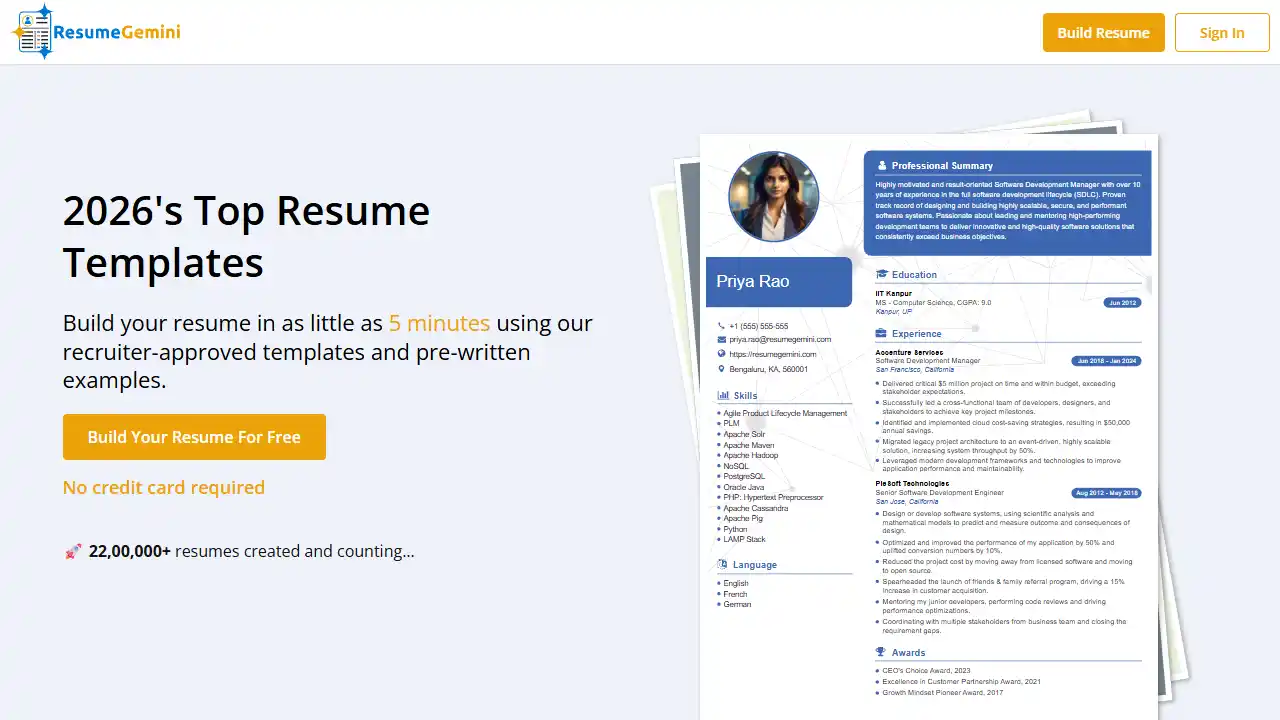
Company: CV Prime, founded 2023 in India, privately held.
A regionally calibrated tool built specifically for the Indian job market and Indian ATS conventions.
Best For
IT professionals in India who need local ATS calibration most global tools don't offer.
Pricing
- Free tier gives 3 PDFs.
- Paid runs around ₹249/month, notably affordable in absolute terms.
Key AI features: AI bullet rewriting.
ATS optimization: Calibrated specifically for Naukri, one of India's dominant job platforms, and analyzed explicitly against job descriptions pulled from that site.
Templates: India-specific formats.
Export formats: PDF, DOCX.
Unique advantage: Direct calibration against Naukri-sourced job descriptions.
Pros
- Recognized as a top regional tool in India specifically because of this local calibration.
Cons
- Limited relevance outside the Indian job market.
The Verdict
The strongest regional pick for India-based IT job seekers.
26. Skillroads
Company: Skillroads, founded 2016, US-based, privately held.
A lighter hybrid option where certified human writers review AI-generated content before you receive the final draft.
Best For
Professionals who want AI speed paired with a human sanity check without paying for a full human-written service.
Pricing
- Free tier is watermarked.
- Paid starts around $9.99.
Key AI features: AI Resume Generator paired with a "Smart CV review" that blends AI and human review.
Cover letter and LinkedIn: AI cover letter and LinkedIn optimization included.
Job match: NLP-based skill extraction.
Export formats: PDF, Word.
Unique advantage: Certified writers review AI-generated content before delivery, a middle ground between pure AI and full human service.
Pros
- A genuinely lighter-touch hybrid option than full services like ZipJob, at a fraction of the cost.
Cons
- Niche provider with a smaller reputation than mainstream builders.
The Verdict
A reasonable budget-friendly hybrid pick if you want a second set of human eyes without ZipJob's price tag.
27. Resumaker.ai
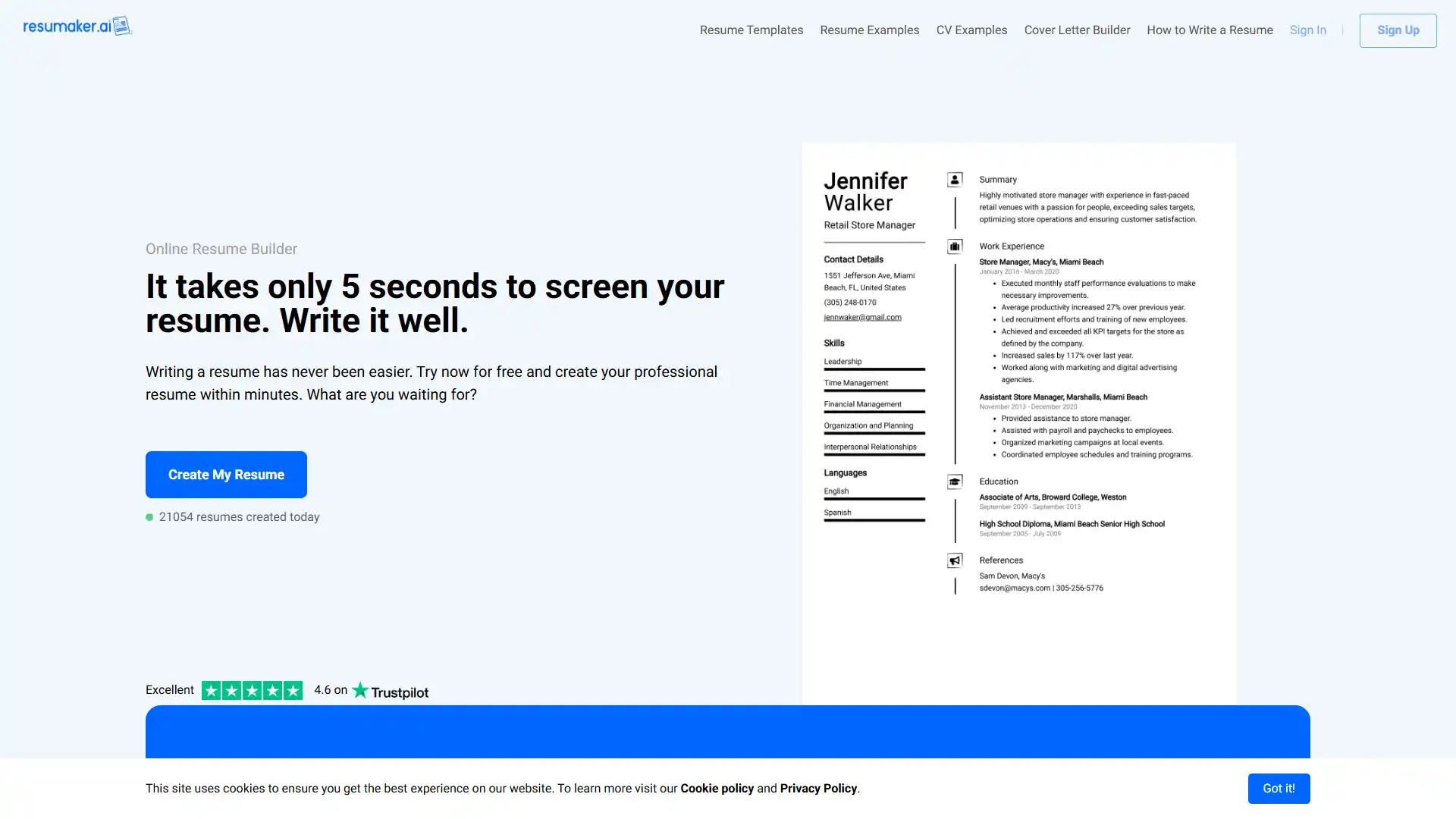
Company: Resumaker S.L., founded 2012 in Barcelona, privately held.
A globally minded tool with an enormous template library and multi-language support, though it shows up frequently in billing complaints.
Best For
International applicants who need a resume translated across different geographic formatting norms.
Pricing
- Trial around $1.95, auto-renewing near $29.99/month.
- This tool shows up frequently in billing complaints, in the same pattern as Zety and the BOLD Limited family.
Key AI features: Automated phrasing suggestions.
ATS optimization: Basic format structuring for parseability, nothing specialist-level.
Templates: 850+, the largest library referenced anywhere in this directory with genuine global-format support.
Export formats: PDF, Word.
Unique advantage: Instantly translates formatting across geographic norms, useful if you're applying in multiple countries at once.
Pros
- Massive template selection and genuine multi-language support.
Cons
- Same billing-cycle trust issue seen across several budget tools in this category.
The Verdict
Useful for its template breadth, but set a cancellation reminder immediately after the trial.
28. Career.io
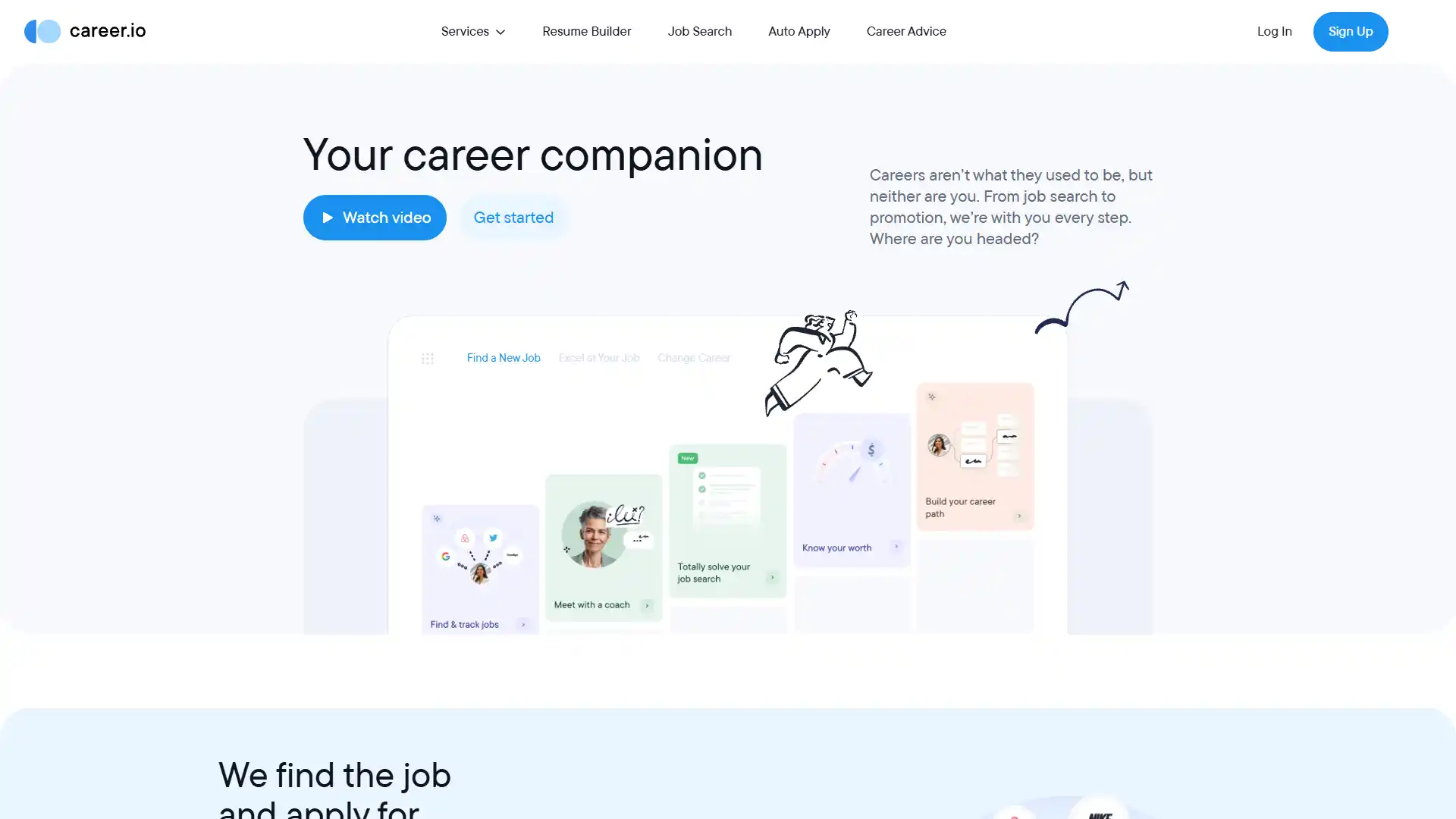
Company: Part of the TopResume Network, US-based, founded 2023.
An end-to-end career lifecycle platform connecting an AI builder directly to human career coaches.
Best For
Mid-career professionals who want ongoing support, not just a single document.
Pricing
Freemium entry point, subscription for full access.
Key AI features: Interview AI and CV Score, algorithmically matched against enterprise hiring databases.
Cover letter: Human coaching integration alongside the AI tools.
Unique advantage: Direct connection to human career coaches within the same platform.
Pros
- A genuinely broad ecosystem connecting resume creation, interview prep, and human coaching in one place.
Cons
- Broader platform means less specialization in any one area compared to focused tools like Rezi or Jobscan.
The Verdict
Worth considering if you want an ongoing coaching relationship, not just a one-time resume.
29. ResumeNerd
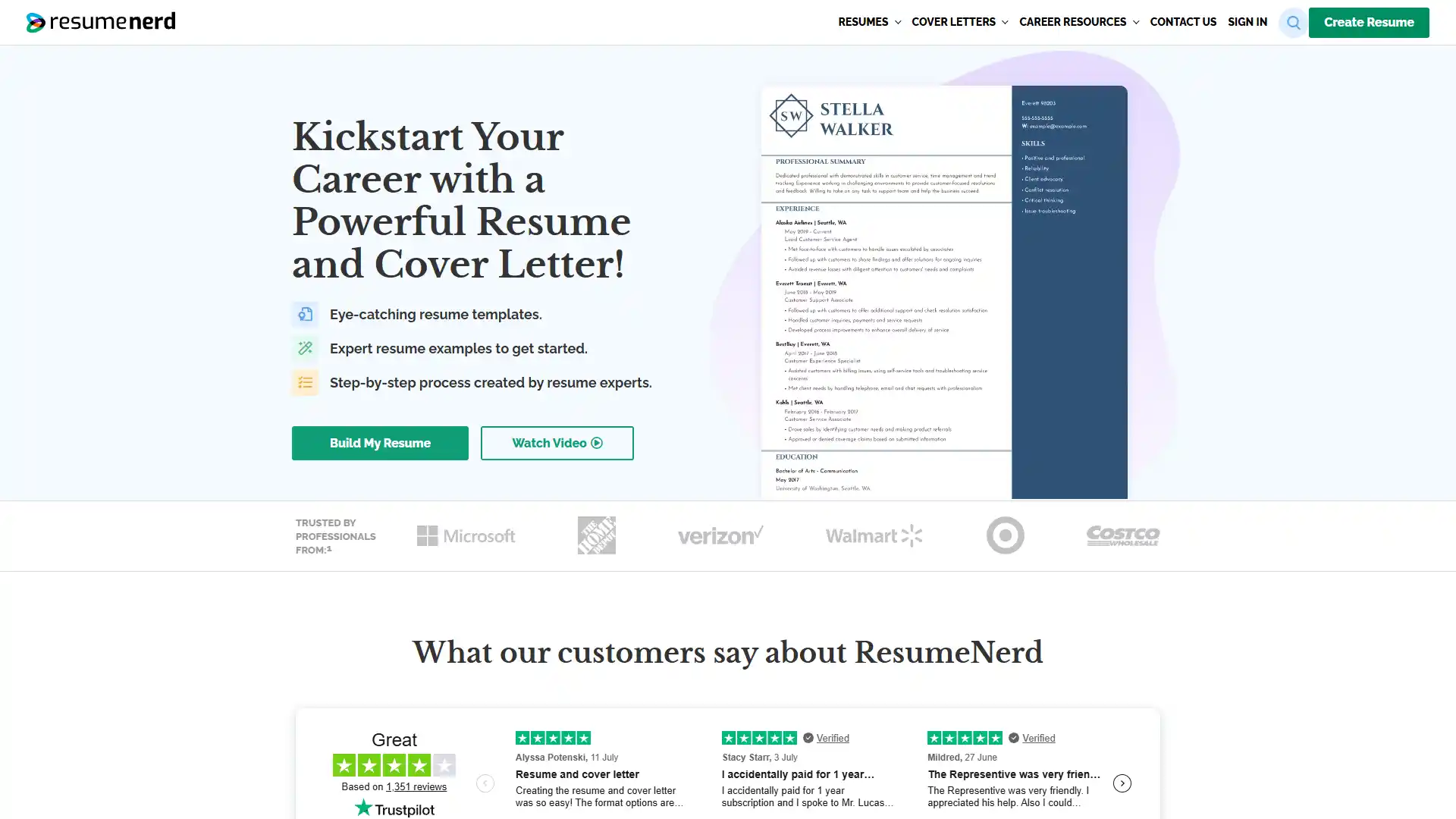
Company: ResumeNerd, US-based, privately held.
A budget-entry tool that pulls live job feeds directly into the resume-building experience.
Best For
Entry-level job seekers who want to browse jobs and build a resume in the same place.
Pricing
Trial around $2.75, renewing near $23.75/month.
Key AI features: Auto-skill insertion based on your inputs.
ATS optimization: Basic parseability checks.
Job match: A live job feed with real-time matching scores built into the app.
Unique advantage: Live job feed integrated directly into the builder.
Pros
- The in-app job browsing feature is a nice convenience for entry-level seekers who haven't settled on target roles yet.
Cons
- Same trial-to-subscription billing pattern seen across several budget tools.
The Verdict
A reasonable budget entry point with the same billing caveat as other trial-based tools in this list.
30. SheetsResume
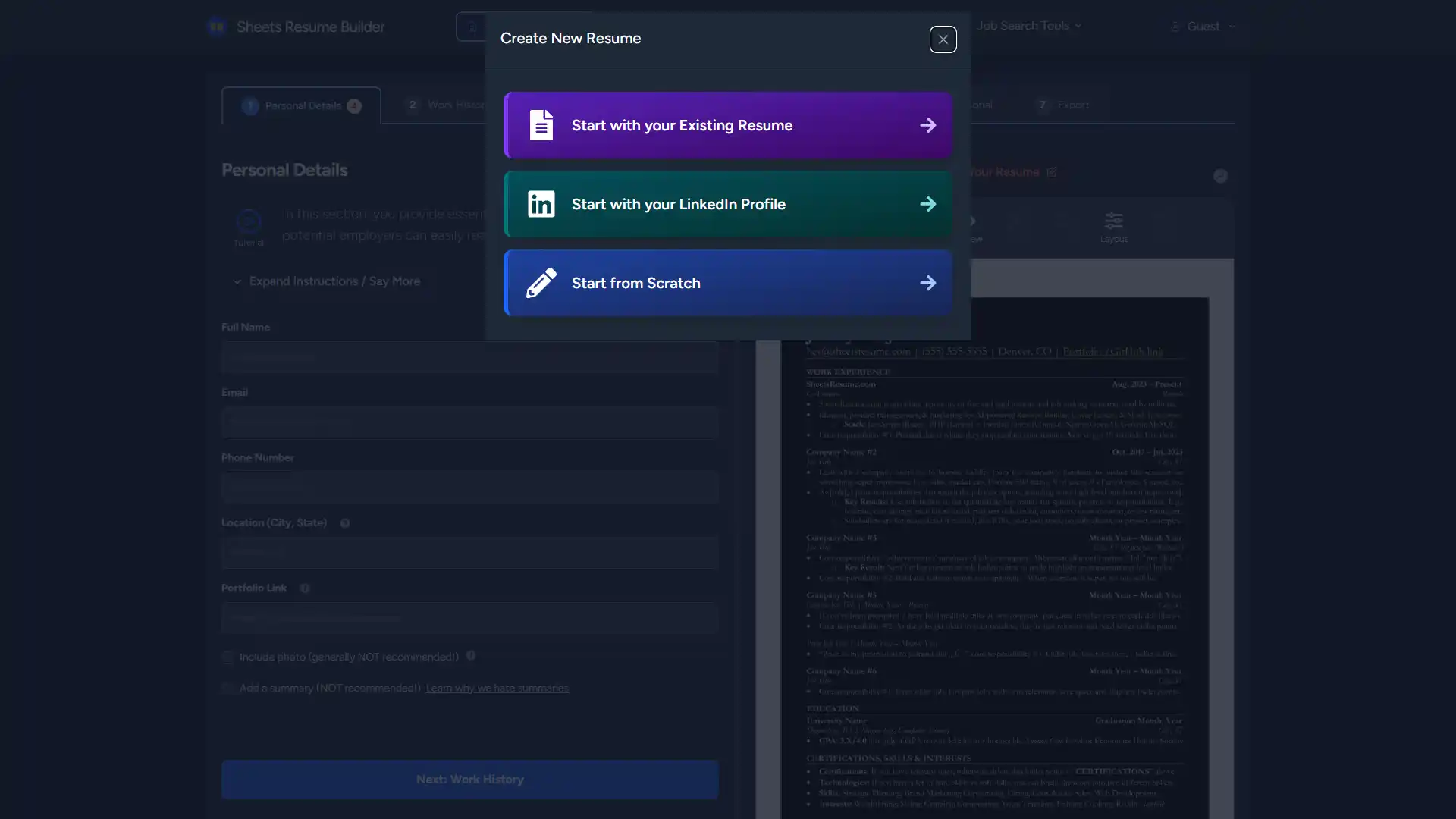
Company: SheetsResume, US-based, privately held.
Built natively on Google Docs, which gives it arguably the most reliable ATS parsing of any tool in this entire directory, since there's no proprietary export format to break.
Best For
Minimalists who want guaranteed ATS-safe formatting above everything else.
Pricing
- Free tier available.
- $39/month, or a $99 lifetime option, one of the more affordable lifetime deals here.
Key AI features: NLP-based content creation, plus a Mock Interview Simulator.
ATS optimization: Cited as 100% ATS-safe formatting specifically because it's Google Docs-native. If a system can read a plain Google Doc, it can read this.
Cover letter: Included.
Export formats: PDF, native Google Docs.
Unique advantage: Native Google Docs integration ensures close to guaranteed parsing reliability.
Pros
- Genuinely the safest ATS parsing option in this list by design, and highly rated on Capterra.
Cons
- Minimalist by nature, so if you want visual flair, this isn't the tool.
The Verdict
The single safest ATS bet in this entire directory if formatting risk is your top concern.
31. ResumeCoach
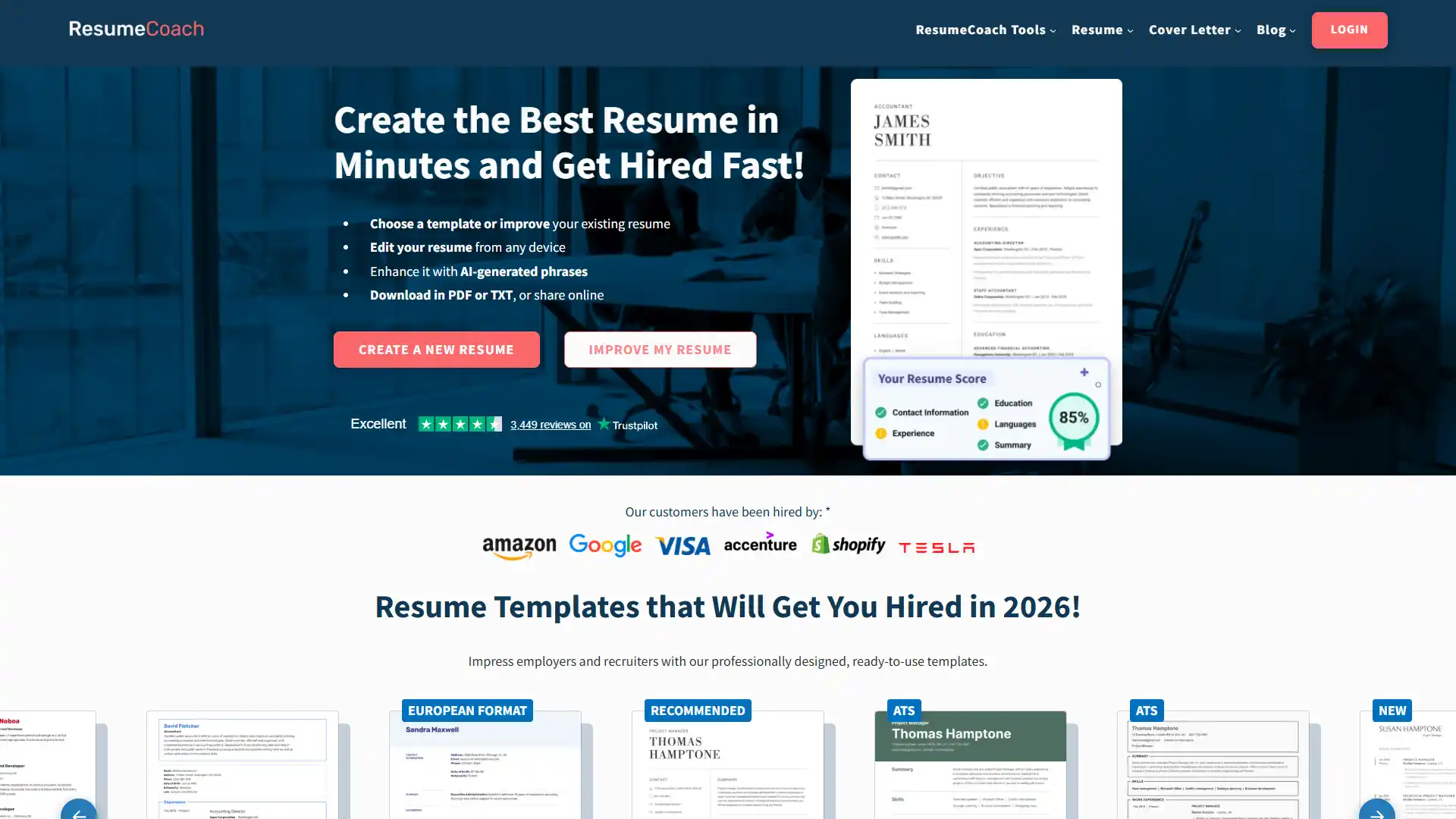
Company: ResumeCoach, US-based, privately held.
Built with students in mind, integrating educational articles directly into the resume-building workflow.
Best For
Students who want guidance alongside the actual building process.
Pricing
- Free tier is TXT-only.
- A flat $2.45/month is one of the cheapest paid plans anywhere in this category.
Key AI features: An AI Copilot with NLP-based parsing suggestions.
ATS optimization: Basic structural checks.
Unique advantage: Integrates educational content directly into the workflow at an unusually low price point.
Pros
- Genuinely educational, useful if you're building your first resume and want to understand the "why" behind each suggestion.
Cons
- Feature depth is basic compared to AI-forward competitors.
The Verdict
A smart, cheap pick for students who want to learn resume-writing fundamentals while building.
32. Resume Optimizer Pro
Company: Resume Optimizer Pro, US-based, privately held.
A highly technical tool aimed at power users, and also the source of some of the most rigorous independent ATS testing data referenced throughout this entire directory.
Best For
Power users who want hyper-accurate, API-driven keyword matching.
Pricing
Freemium model, premium unlocks full access and API features.
Key AI features: GPT-5-class rewriting.
ATS optimization: High formatting preservation with independently cited 94% keyword accuracy matching, some of the strongest numbers in this list.
Cover letter: Included.
Export formats: PDF, DOCX.
Unique advantage: The only tool in this list offering a genuine API for bulk resume generation.
Pros
- The unique API for programmatic, bulk resume generation is a genuine standout for developers or anyone managing applications at scale.
Cons
- More technical than most job seekers need; overkill for a casual, single-resume use case.
The Verdict
A power-user tool that also happens to have produced some of the best independent testing data in this whole niche.
33. FirstResume
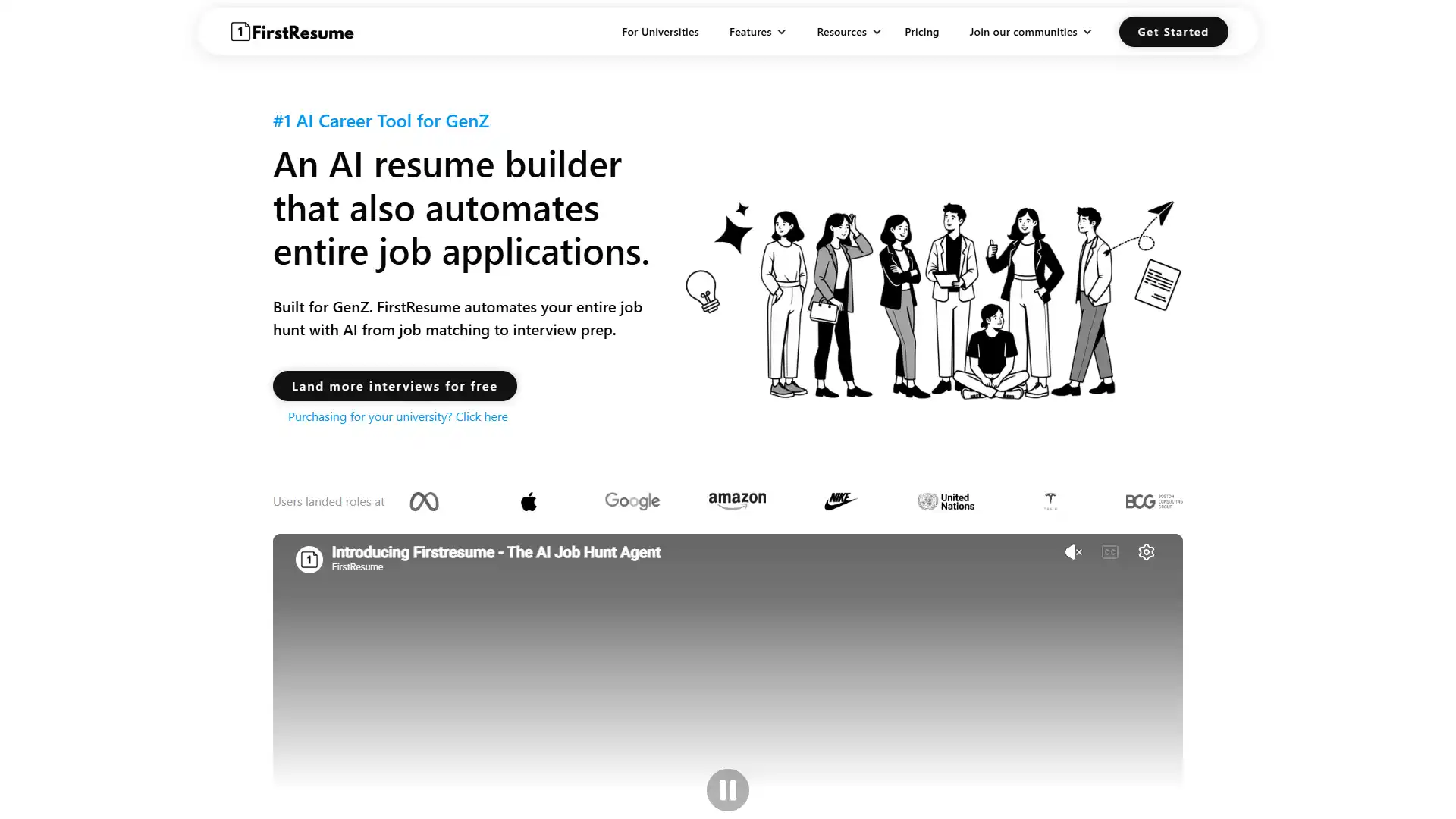
Company: FirstResume, US-based, privately held.
Aimed at Gen Z and fresh graduates with a genuine focus on one-click automation.
Best For
Fresh graduates who want automated company research and outreach alongside the resume itself.
Pricing
- Free tier available.
- A $39.99 lifetime option is one of the more affordable one-time deals in this list.
Key AI features: AI compatibility analysis ensuring your data maps cleanly to application portals.
Cover letter and outreach: Cover letters, outreach emails, and AI-generated company research, a broader feature set than most builders at this price point.
Job match: Maps your profile against massive job datasets.
Unique advantage: Automates company research and outreach emails alongside the resume itself.
Pros
- The automated company research and outreach email drafting genuinely goes beyond what most resume tools attempt.
Cons
- Emerging tool, smaller track record than established names.
The Verdict
A genuinely differentiated, affordable pick for fresh graduates comfortable with a newer brand.
34. ResumeAI
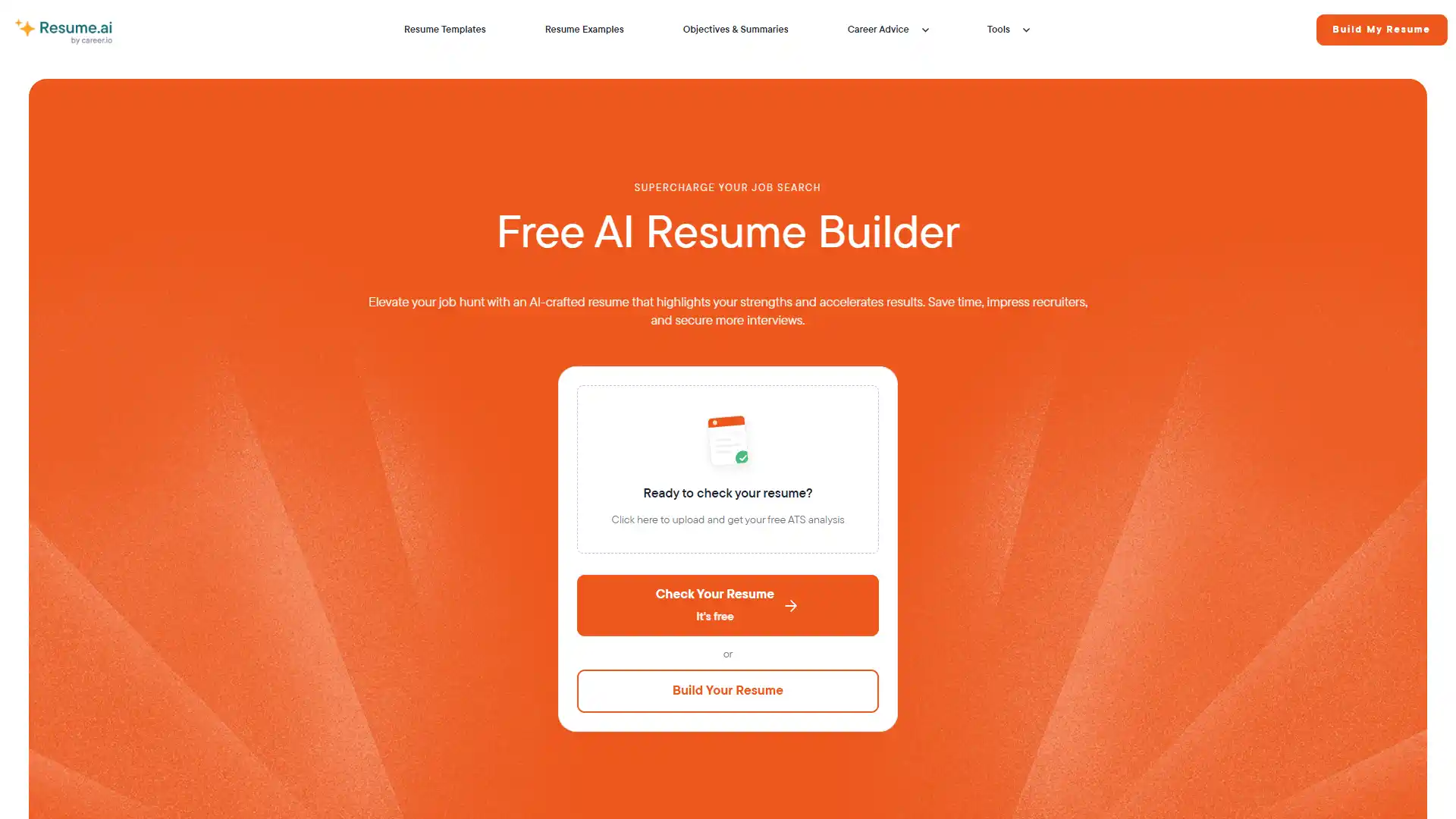
Company: Operated by youraifinder, global reach, grant-supported.
A completely free tool with no catch, aimed squarely at budget-conscious job seekers.
Best For
Anyone who needs a basic, competent resume and doesn't want to pay anything.
Pricing
Completely free.
Key AI features: Real-time phrasing feedback.
ATS optimization: Basic parseability evaluation.
Cover letter: Interview coaching templates bundled in.
Unique advantage: Bundles free interview-coaching content alongside the resume tool itself, at zero cost.
Pros
- Rated 4.6/5 on Product Hunt, and genuinely free with no paywall.
Cons
- Basic feature depth compared to paid specialists.
The Verdict
One of the best truly free options in this entire directory.
35. ResumeMaker.Online
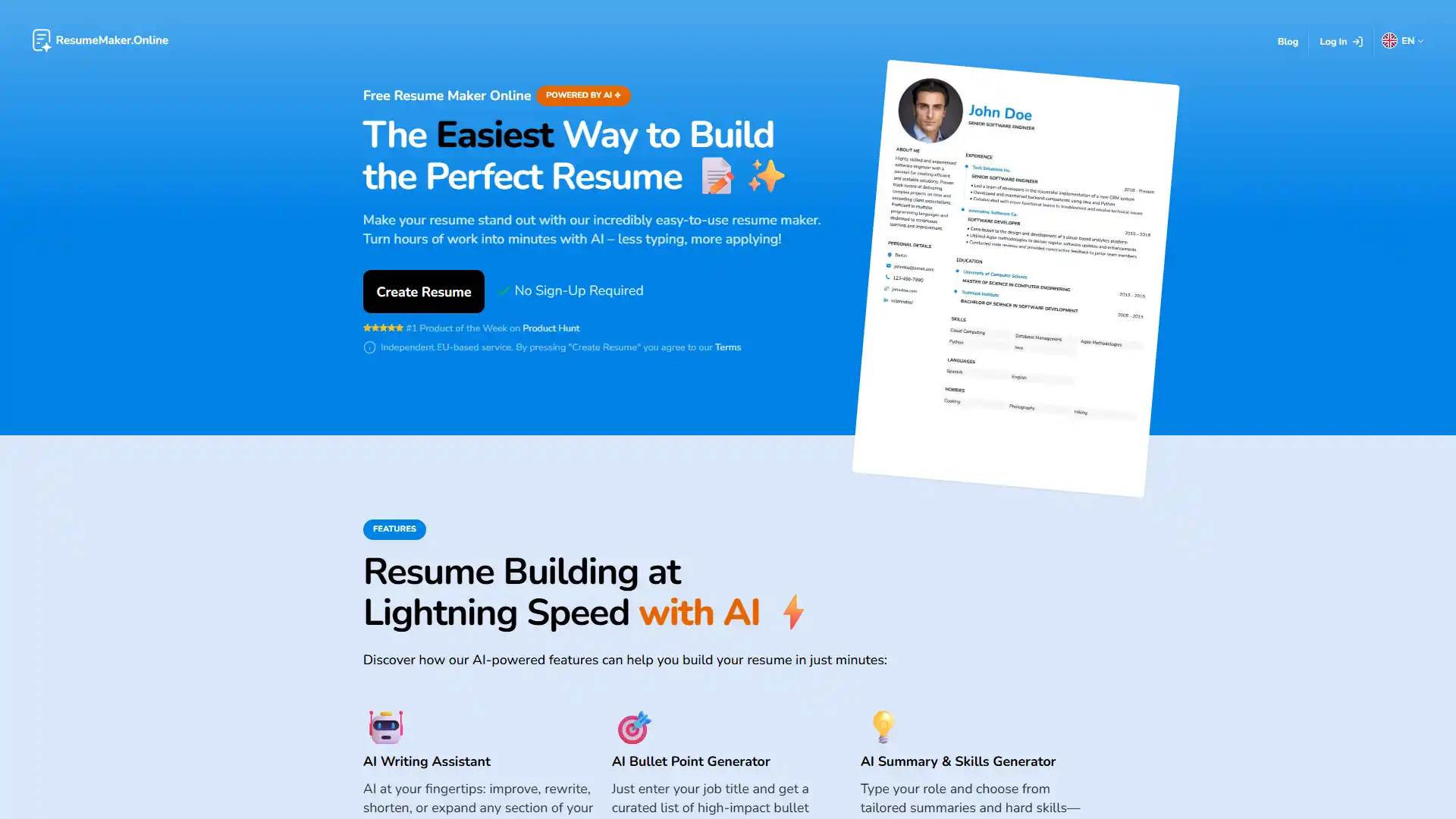
Company: ResumeMaker.Online, based in Argentina, founder Fernando.
A no-signup-required tool built for rapid, frictionless resume creation.
Best For
Anyone who wants to start building immediately without handing over an email address first.
Pricing
- Free to try.
- Subscription runs around $10 beyond that.
Key AI features: Basic AI phrasing integrations.
ATS optimization: Simple layout that ensures safe, if basic, parsing.
Unique advantage: Absolute zero-friction start, no account required.
Pros
- Rated on Product Hunt (commonly cited around 3.7/5), and the zero-friction, no-signup entry point is genuinely rare in this category.
Cons
- Basic feature set, minimal differentiation beyond the frictionless entry.
The Verdict
A fine quick-start option if you want to test a resume idea without committing to a signup.
36. AI Builder for Recruiters
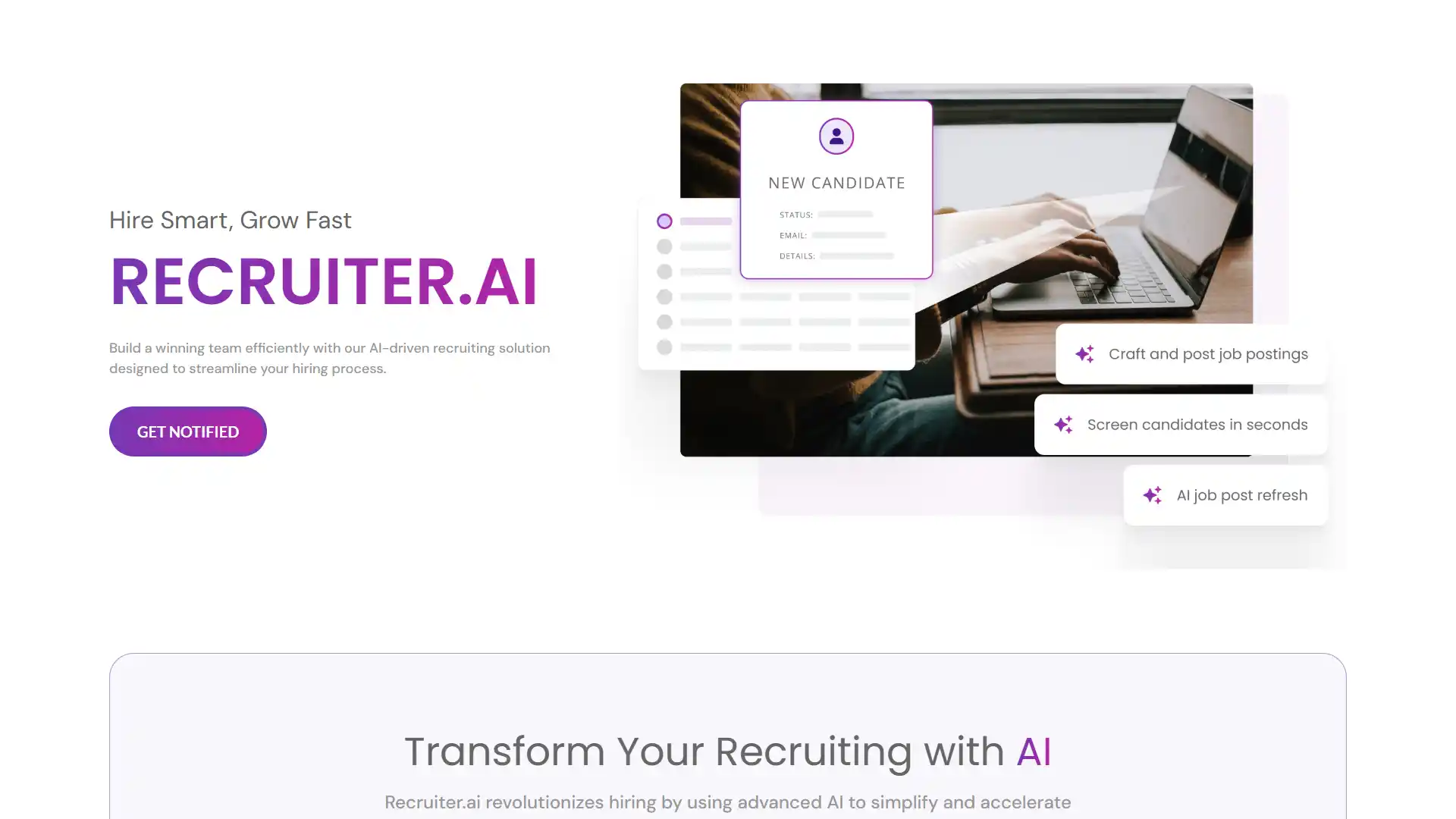
Company: An independent tool founded 2024 by Jan Jedlinski, bootstrapped.
A B2B tool, not built for individual job seekers. Worth knowing about if you work in staffing.
Best For
Staffing agencies formatting and redacting candidate resumes in bulk before presenting them to clients.
Pricing
Free options available, premium tiers for agencies.
Key AI features: OCR for image parsing and one-click candidate redaction.
ATS optimization: Specifically formatted for Bullhorn ATS, the dominant platform in staffing and recruiting.
Cover letter: AI summaries for candidate presentation.
Unique advantage: Bulk formatting and candidate redaction specifically calibrated for Bullhorn.
Pros
- A genuine niche specialist, ranked in Product Hunt's top 10 in its category.
Cons
- Not relevant at all to individual job seekers, this is purely a B2B recruiting tool.
The Verdict
Not for you unless you work in staffing or recruiting operations.
37. Yotru
Company: Yotru, US-based, privately held.
An enterprise/EdTech tool built for institutions deploying resume tools to entire student cohorts, not individual job seekers.
Best For
Educational institutions managing resume support at scale for large student populations.
Pricing
Enterprise/B2B pricing only, not available to individual consumers directly.
Key AI features: AI-driven student coaching.
ATS optimization: Standardized ATS-optimized layouts across the whole cohort.
Unique advantage: Built specifically for administrators managing cohorts, not individuals.
Pros
- High potential specifically in the EdTech space for administrators overseeing large student groups.
Cons
- Not accessible or relevant for an individual job seeker.
The Verdict
Only relevant if you're evaluating tools on behalf of a school or university career center.
38. Resume Inspector
Company: Resume Inspector, US-based, privately held.
Built around a "Master Profile" concept: you build one comprehensive profile once, and the tool generates hyper-tailored versions from it for each application.
Best For
Data-driven applicants who want deep gap analysis against a single master profile rather than starting from scratch each time.
Pricing
- Free tier is limited.
- $15-30/month unlocks full analysis.
Key AI features: A match-scoring system built specifically around your Master Profile.
ATS optimization: Deep formatting-gap highlighting.
Unique advantage: Master Profile storage generates hyper-tailored, splintered resumes from one central source.
Pros
- Rated 4.6/5 on Capterra, and the Master Profile workflow genuinely saves time across multiple applications.
Cons
- Requires upfront investment building out the master profile before you see the full benefit.
The Verdict
A smart pick if you're applying to many similar roles and want to avoid rebuilding from scratch each time.
39. ResumeGyani
Company: ResumeGyani, India-based, privately held.
A regional specialist aimed at Indian freshers with job listings aggregated directly into the platform.
Best For
Indian freshers who want regional formatting plus aggregated job board listings in one place.
Pricing
Trial/freemium entry, subscription beyond that.
Key AI features: Real-time phrasing feedback.
ATS optimization: Regional ATS scoring calibrated for Indian job platforms.
LinkedIn: LinkedIn optimizer included.
Job aggregation: Pulls from 20+ regional Indian job boards directly into the platform.
Unique advantage: Aggregates jobs from 20+ regional Indian sites directly into the builder.
Pros
- Genuine regional specialization most global tools skip entirely.
Cons
- Emerging tool with a smaller track record than established regional players like CV Prime.
The Verdict
A solid regional pick for Indian freshers, especially if you want job discovery bundled in.
40. Jobalytics
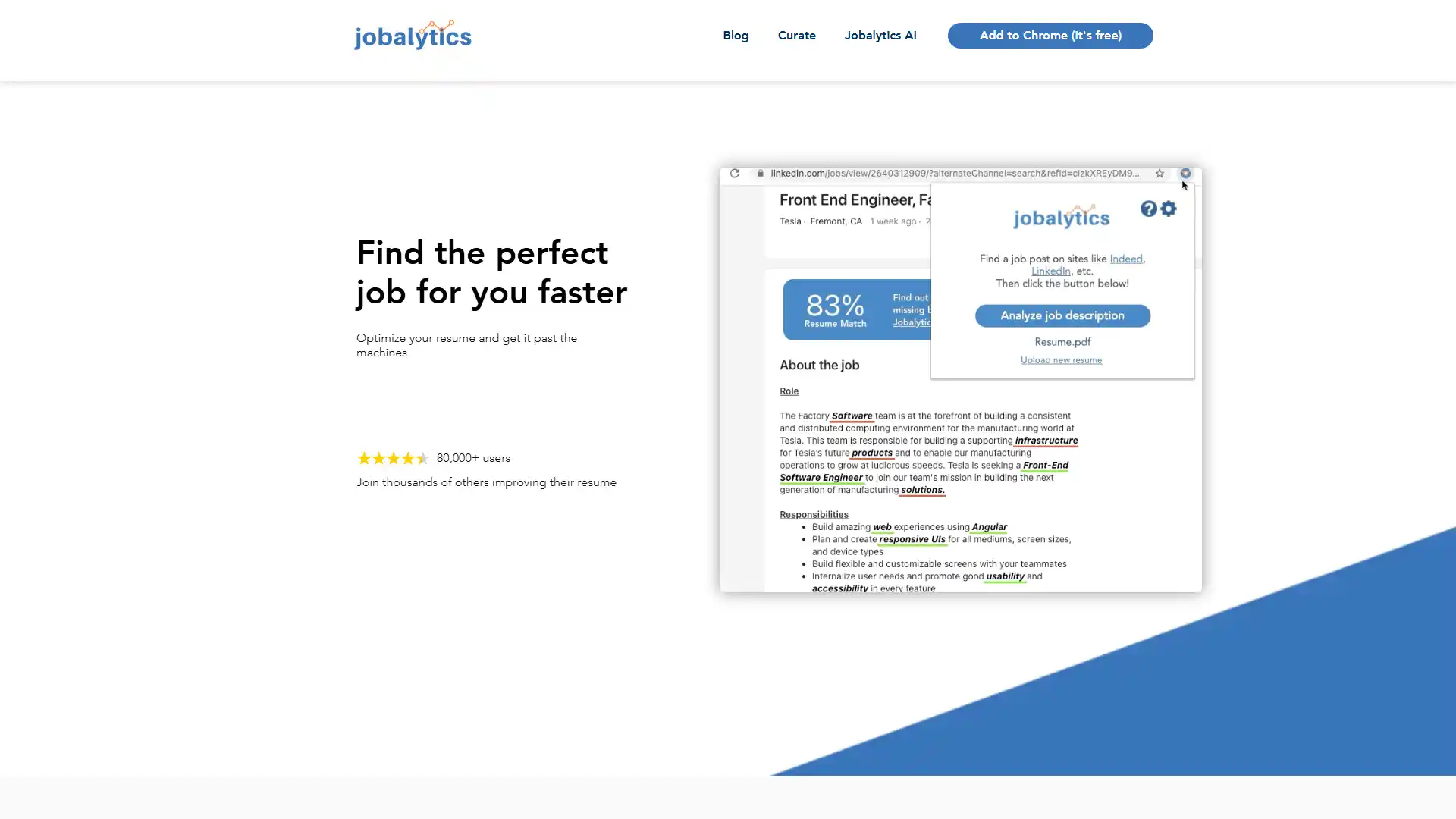
Company: Jobalytics, US-based, privately held.
A free, no-frills analytical scanner, similar in spirit to Jobscan but leaner and without the builder component.
Best For
Anyone who wants a free, uninflated keyword-match score without a sales pitch attached.
Pricing
- Free for basic checks.
- Pro required for full AI features.
Key AI features: A precise analytical scoring engine. No generation, purely a scanner.
ATS optimization: Keyword match percentage plus a clear missing-keyword list.
Unique advantage: Uninflated algorithmic keyword match scores without a paywall on the core feature.
Pros
- Top-ranked for accuracy among analysis tools in independent reviews, and the free tier genuinely doesn't paywall the basics.
Cons
- No document builder at all, purely diagnostic.
The Verdict
A strong free complement to any builder on this list, worth running before every application.
41. FastApply
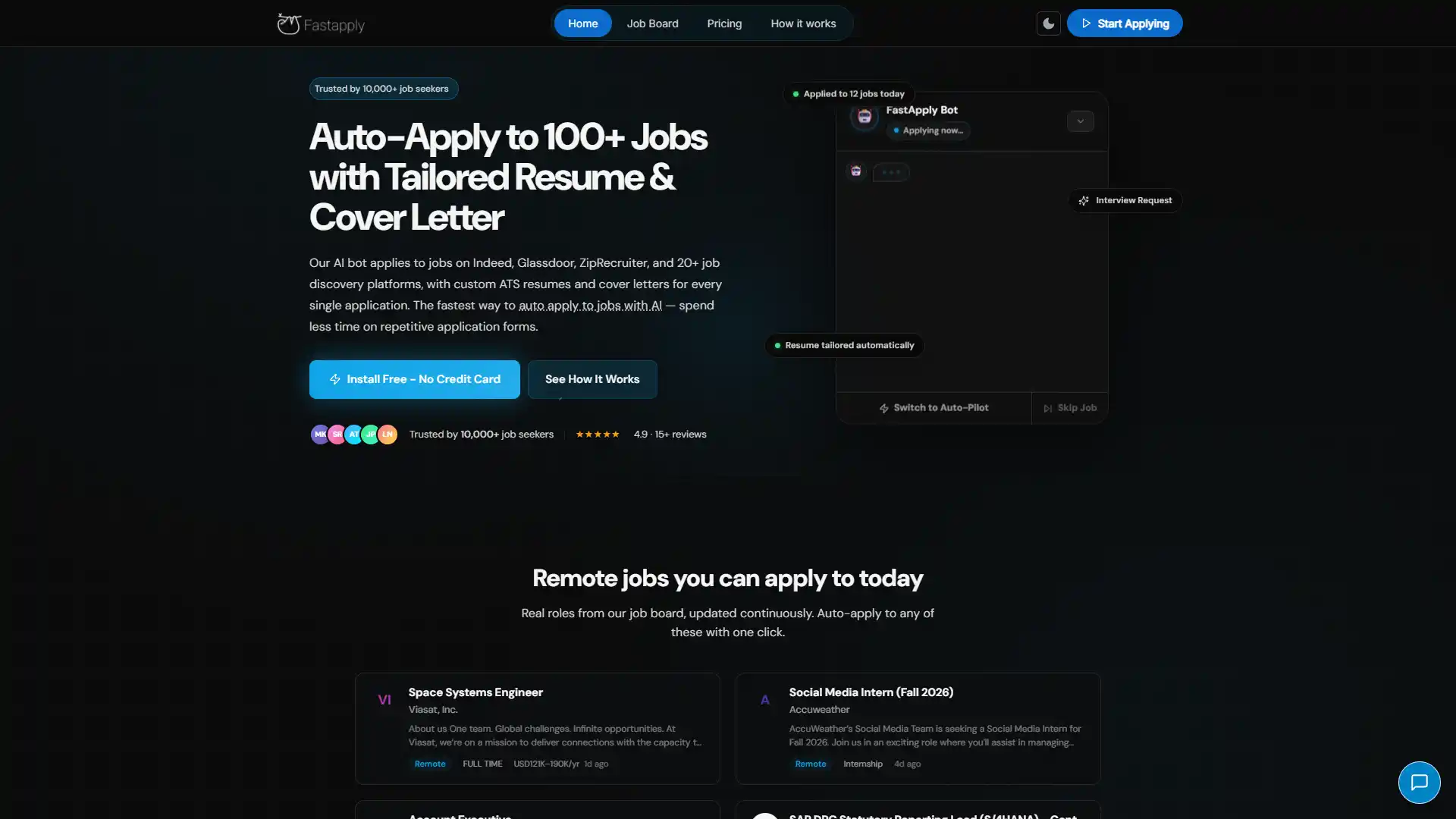
Company: FastApply, US-based, privately held.
Built for aggressive job hunters who want tailoring and application submission combined into one automated pipeline.
Best For
Job seekers who want a uniquely tailored resume generated and submitted within minutes of a new posting going live.
Pricing
- Free tier gives 5 credits.
- Paid plans run $14-49/month.
Key AI features: A 24/7 AI Job Matcher with per-job tailoring.
ATS optimization: Maps generated text precisely to how Workday and Lever parse and rank documents.
Outreach: Automated outreach alongside the application itself.
Unique advantage: Real-time semantic drafting against live job descriptions the moment they're posted.
Pros
- Recognized as a top automation tool in this category with genuinely fast turnaround from posting to application.
Cons
- The speed-first approach means less time for manual review of each tailored version before it's sent.
The Verdict
The fastest automation-first option here, best for high-volume applicants comfortable trusting the AI's speed.
42. Wix Resume Builder
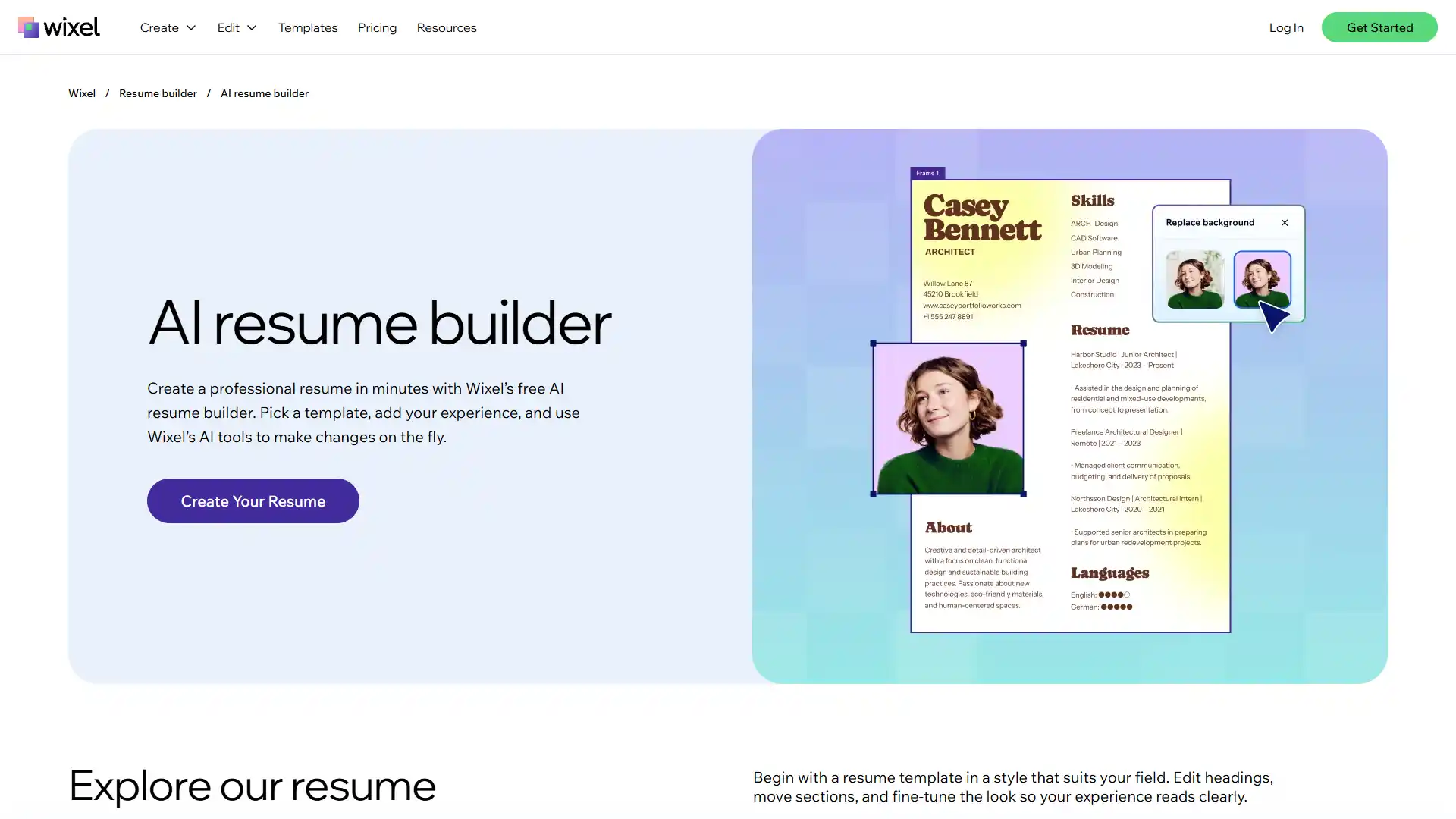
Company: Wix.com, founded 2006 in Tel Aviv by Avishai Abrahami and others, publicly traded.
Built for absolute aesthetic control, backed by Wix's broader design ecosystem.
Best For
Designers and anyone who wants total visual control, including AI-generated professional headshots from casual selfies.
Pricing
Completely free.
Key AI features: An AI Portrait Generator and AI Color Palette tool.
ATS optimization: Poor. Visual focus comes at the direct cost of ATS compliance, similar risk profile to Canva.
Unique advantage: Turns casual selfies into professional-looking headshots via AI.
Pros
- Genuinely striking visual design, and the AI headshot feature is a fun, useful bonus.
Cons
- Weak ATS compliance means this isn't a safe primary resume for automated application portals.
The Verdict
Fine for networking materials or a personal portfolio site, risky as your only resume for ATS-heavy applications.
43. Indeed Resume Builder
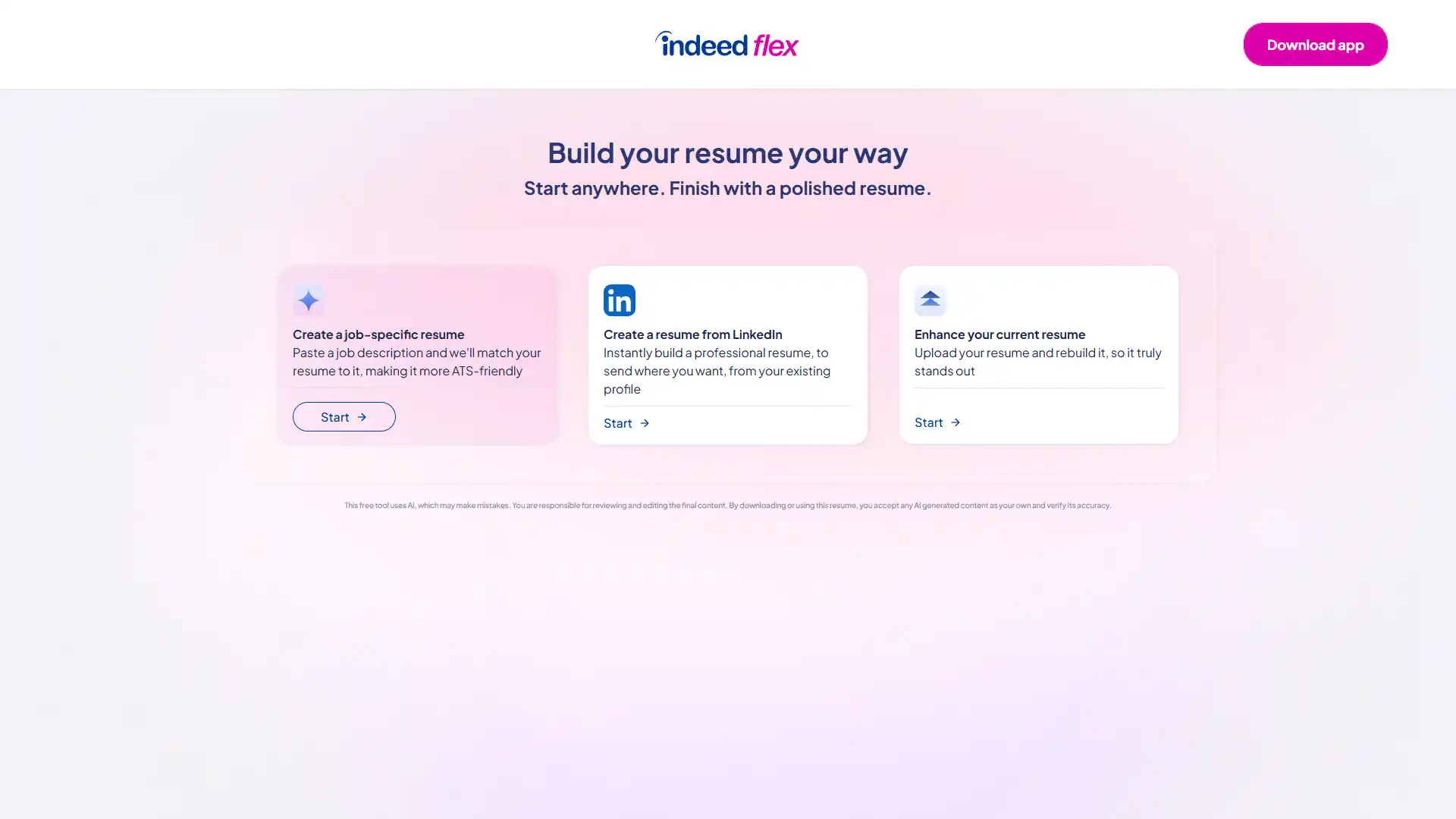
Company: Owned by Indeed, headquartered in Austin, founded 2004.
Built to integrate seamlessly with Indeed's own platform and internal ATS.
Best For
Anyone already applying primarily through Indeed.
Pricing
Completely free.
Key AI features: Basic AI text assistance.
ATS optimization: Perfect compliance with Indeed's own internal ATS specifically, though that's the only system it's optimized for.
Templates: Pre-written examples.
Unique advantage: Directly feeds structured data into the world's largest job board.
Pros
- Ubiquitous adoption and zero cost with seamless integration if you're already using Indeed to search.
Cons
- Optimization is specific to Indeed's own system, not a general-purpose ATS-safety guarantee elsewhere.
The Verdict
A sensible free default if most of your applications already go through Indeed.
44. CakeResume
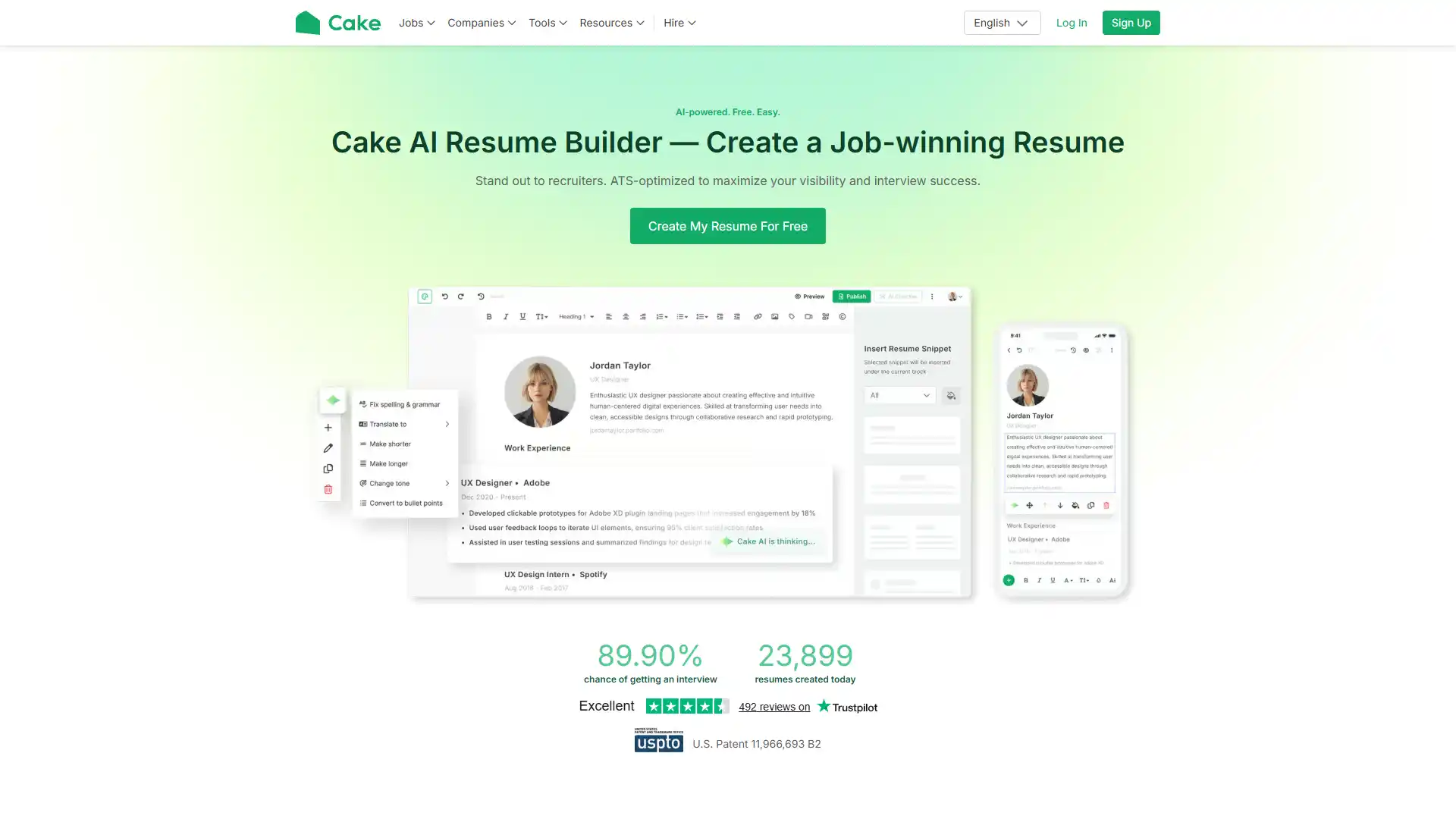
Company: CakeResume, founded 2016 in Taipei by Trantor Liu, backed by roughly $5.9M in venture funding.
A multimedia-forward tool popular in the APAC tech market.
Best For
Tech talent in APAC who want to embed code repositories or video directly into a digital resume.
Pricing
Freemium model, subscription beyond that.
Key AI features: Generative text snippets.
ATS optimization: Multimedia elements can break older parsers, similar risk profile to design-first tools.
Templates: Multimedia-forward, portfolio integration built in.
Languages: English and Mandarin support.
Unique advantage: Embeds code repositories or videos directly into digital resumes.
Pros
- Strong reputation in APAC specifically, and the portfolio/code-repository embedding is genuinely useful for developers.
Cons
- Same ATS-parsing risk as other multimedia-heavy tools.
The Verdict
A strong niche pick for APAC tech talent who want a portfolio-style digital resume with the usual multimedia ATS caveat.
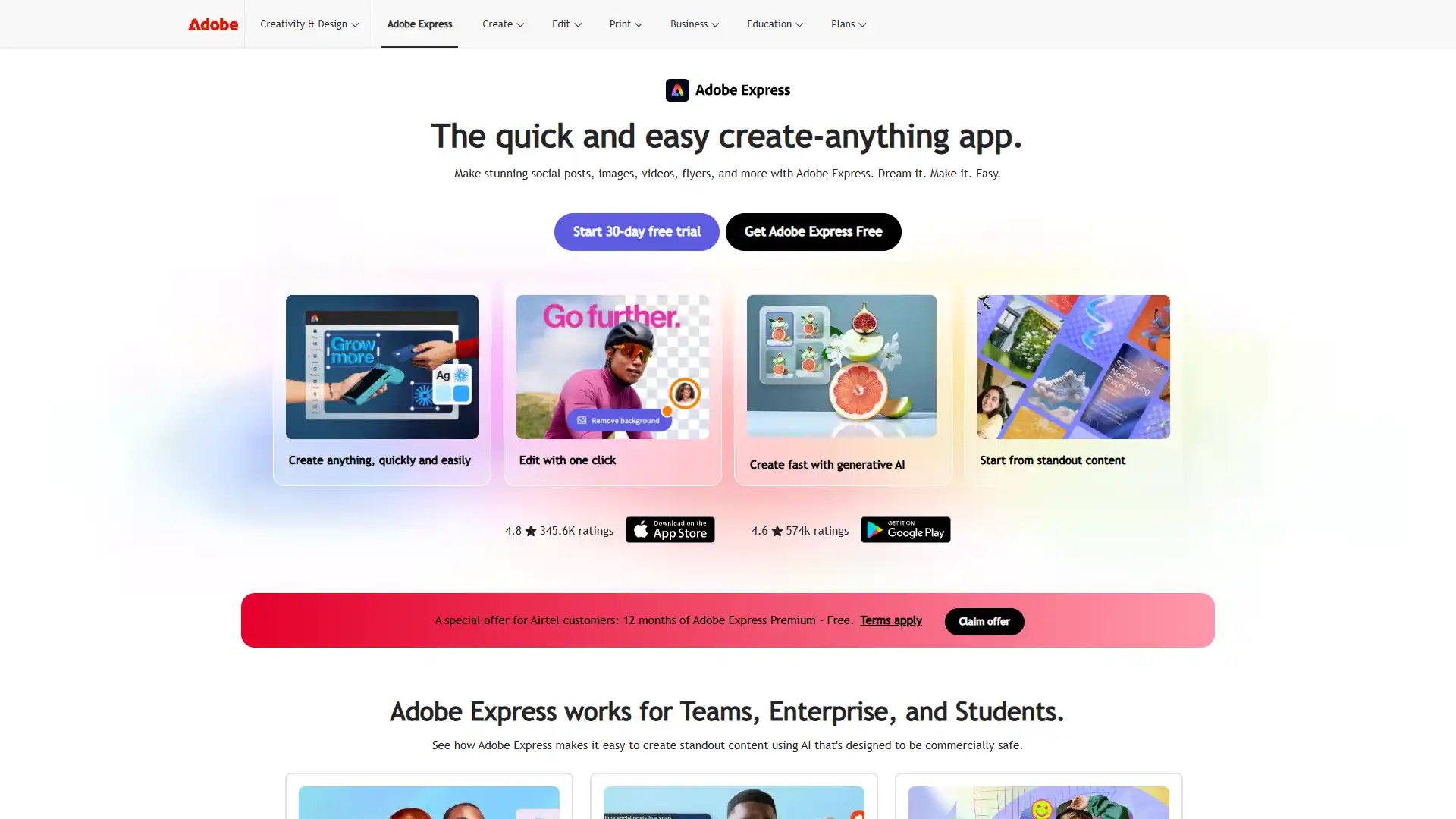
45. Adobe Express
Company: Adobe Inc., San Jose, publicly traded.
Leverages Adobe's design ecosystem to reformat resume text into polished graphic layouts.
Best For
Creatives who want high-end graphic asset integration in their resume.
Pricing
Free tier available, premium required for full asset access.
Key AI features: AI reformatting of plain text into graphic layouts.
ATS optimization: Historically the weakest legacy ATS performance referenced anywhere in this directory, since it defaults to reformatting text into graphics.
Unique advantage: AI automatically reformats uploaded text into graphic layouts, leveraging Adobe's broader design ecosystem.
Pros
- Industry-standard design tooling if you're building a portfolio-style resume for a creative role.
Cons
- The weakest ATS parsing performance in this entire list.
The Verdict
Reserve this one strictly for creative portfolio pieces, never as your only ATS-facing resume.
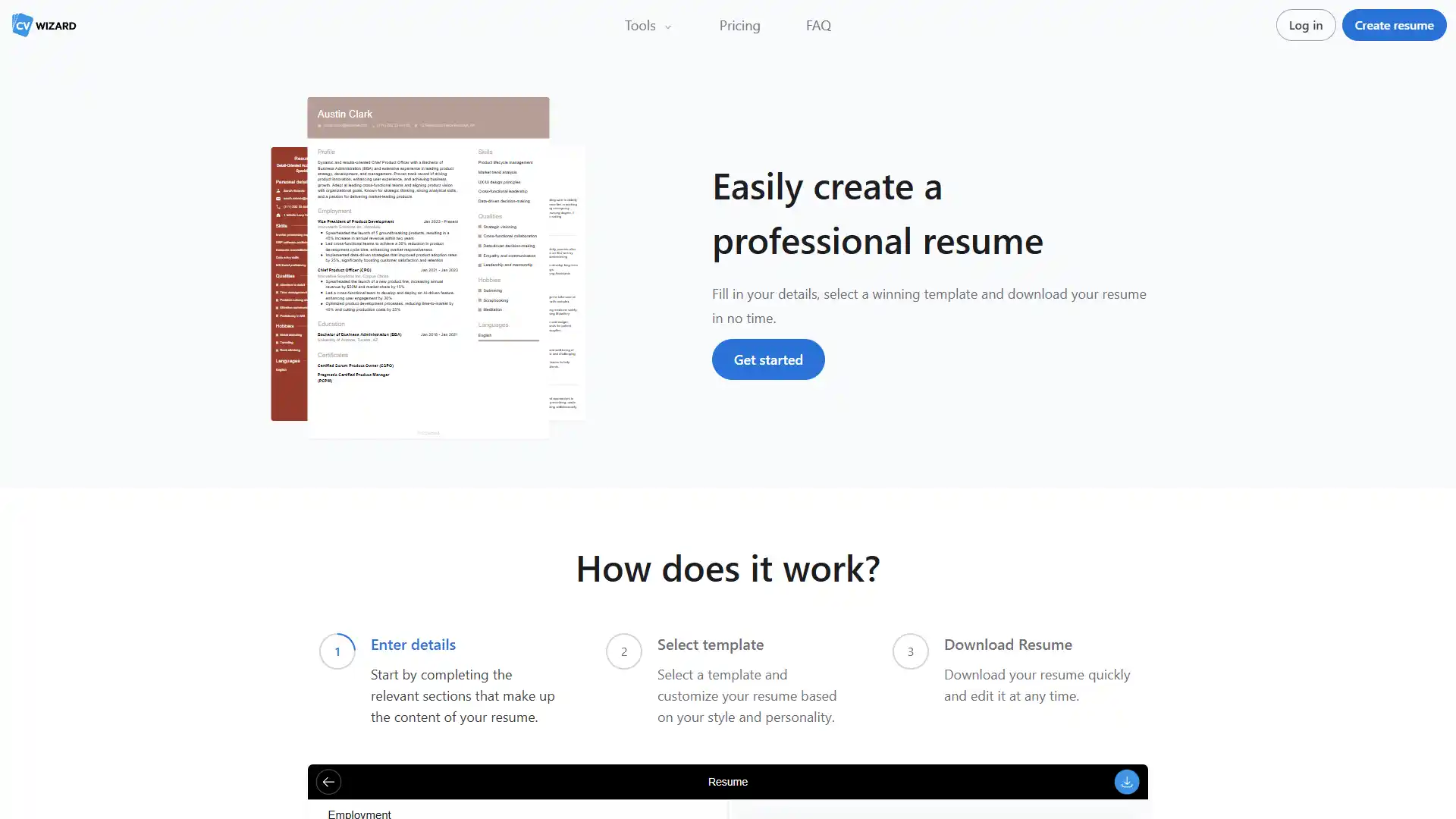
46. CVwizard
Company: CVwizard, Europe-based, privately held.
Built specifically around European CV conventions and formatting standards.
Best For
European job seekers who need a CV formatted to EU norms rather than a generic global template.
Pricing
Subscription-based, no meaningful free tier.
Key AI features: Basic phrase optimization.
ATS optimization: Calibrated for European CV parsing standards specifically.
Unique advantage: Optimized specifically for European CV standards.
Pros
- Established specifically in the EU market with formatting genuinely tailored to that region.
Cons
- No free tier to test before committing.
The Verdict
A sensible, if narrow, pick if you're applying exclusively within Europe.
47. ResumeHelp
Company: Owned by BOLD Limited, San Juan, Puerto Rico.
Conservative, traditional templates proven to pass legacy ATS systems, part of the same corporate family as Zety and Resume Genius.
Best For
Traditional applicants who want affordable, safe, proven formatting.
Pricing
Trial around $2.90, renewing near $24.90/month, the same general billing pattern as its sibling brands.
Key AI features: Pre-written AI phrase insertion.
ATS optimization: Safe, traditional legacy templates.
Cover letter: Cover letter builder included.
Templates: 23 conservative designs.
Export formats: PDF, MS Word, HTML.
Unique advantage: HTML export option, unusual in this category.
Pros
- A steady, established user base and genuinely conservative, safe formatting.
Cons
- Same trial-to-subscription billing pattern as its BOLD Limited siblings.
The Verdict
Safe and unexciting with the same billing caveat as the rest of its corporate family.
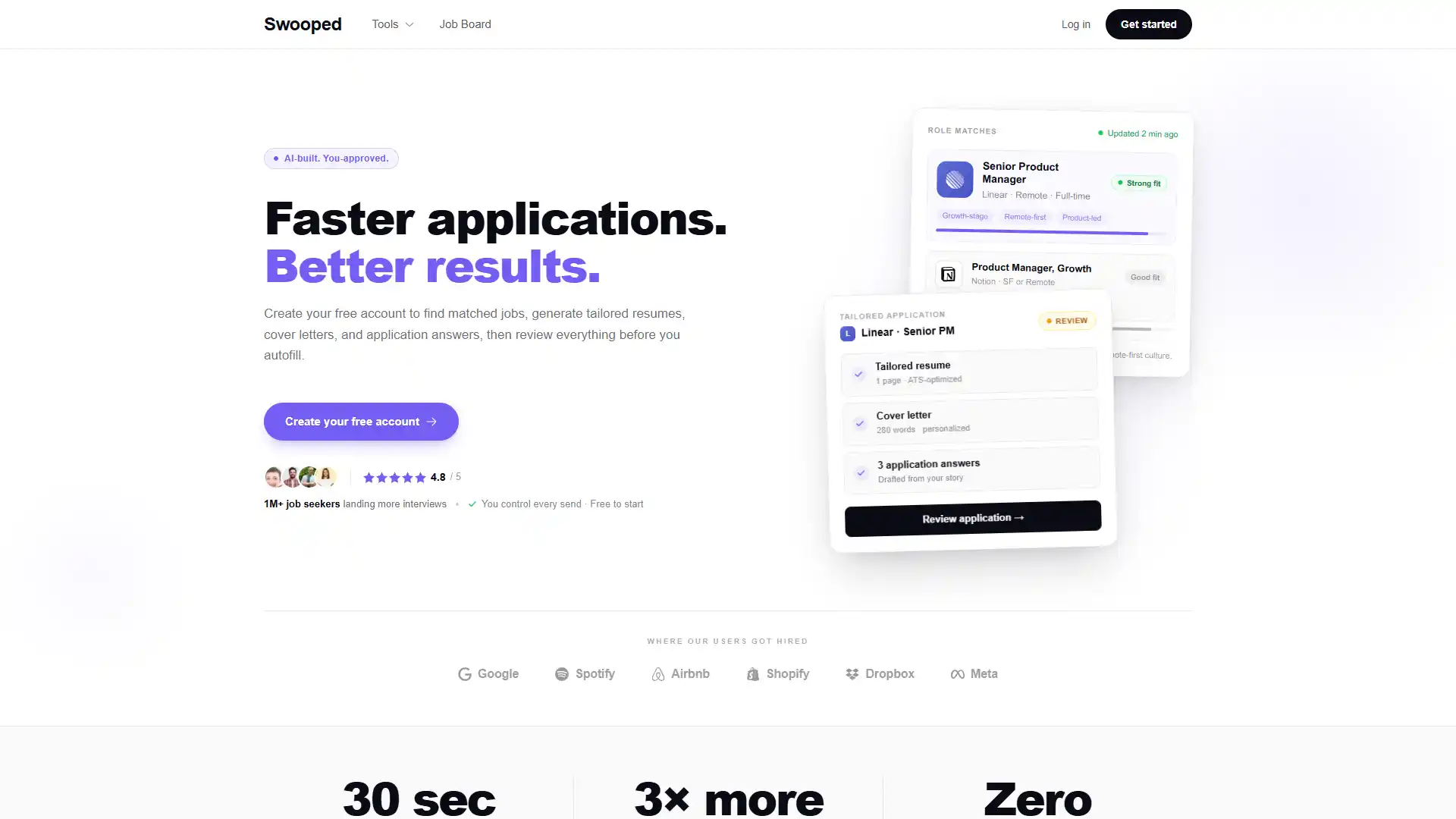
48. Swooped
Company: Swooped, US-based, privately held.
Combines resume and headshot generation with applicant funnel tracking.
Best For
Anyone who wants to track how their applications are performing across the funnel, not just build a document.
Pricing
Free tier available, premium beyond that.
Key AI features: AI resume generation paired with AI headshot creation.
ATS optimization: Basic structural parsing.
Job tracking: Tracks applicant funnels via keyword density analysis.
Unique advantage: Connects text generation with headshot creation in one workflow.
Pros
- Rated 4.4/5, and the combination of resume, headshot, and funnel tracking in one tool is a genuinely broad feature set.
Cons
- Depth in any single feature area (resume writing specifically) trails dedicated specialists.
The Verdict
A reasonable all-in-one pick if you want breadth over depth in a single subscription.
49. Acedit
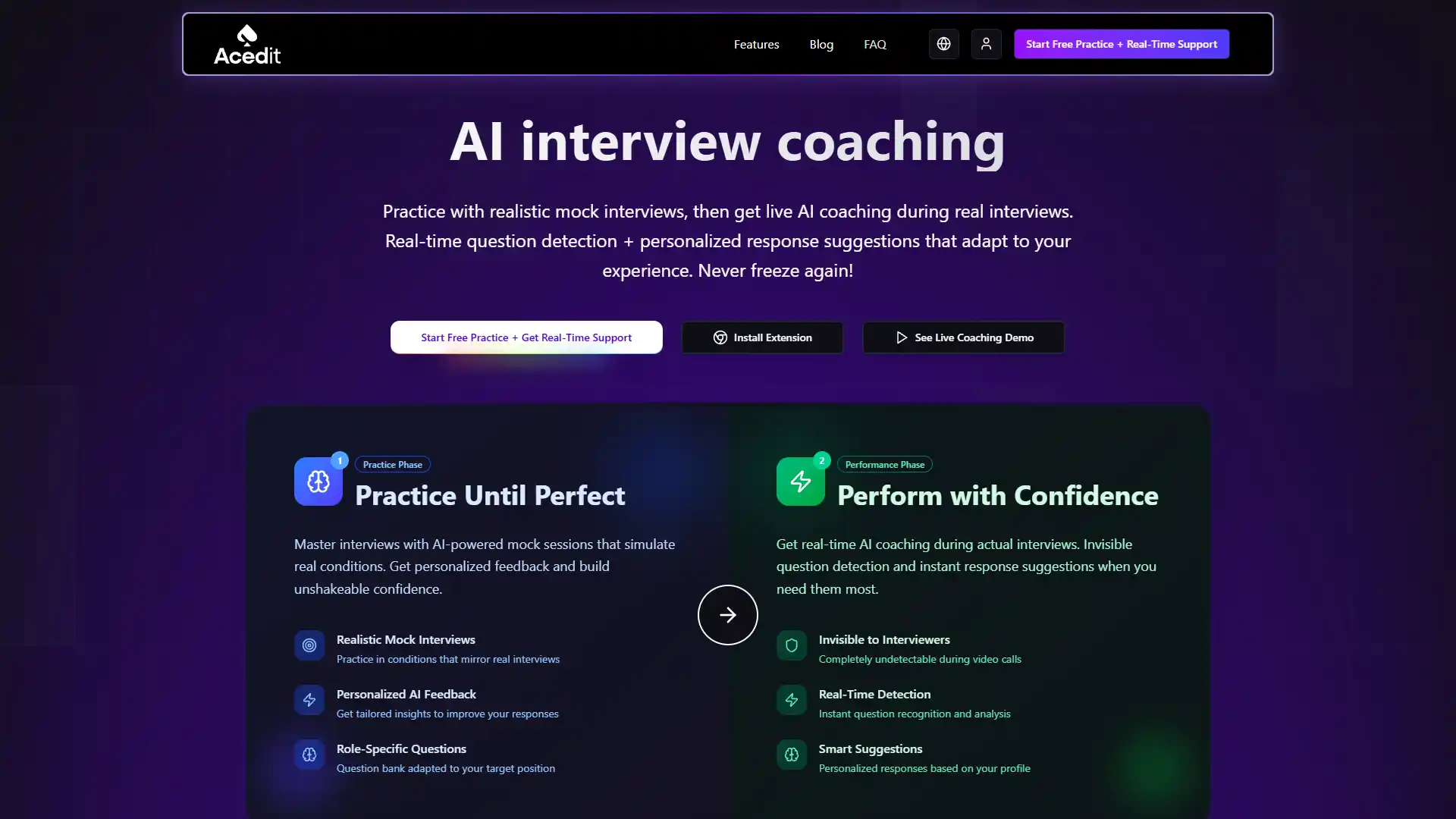
Company: Acedit, US-based, privately held.
A Chrome-extension-based coaching tool rather than a traditional builder.
Best For
Active job seekers who want real-time coaching as they browse LinkedIn job listings.
Pricing
- Free tier available.
- Lifetime access runs around $45.
Key AI features: Real-time, extension-based coaching.
Cover letter and LinkedIn: AI cover letters and LinkedIn integration included.
Job match: Live matching against jobs you're actively viewing in your browser.
Unique advantage: Coaches candidates in real time as they browse LinkedIn jobs, rather than after the fact.
Pros
- A genuinely useful niche utility if you spend a lot of time browsing LinkedIn job listings directly.
Cons
- Coaches rather than builds, so you'll still need a separate tool to actually create the resume document.
The Verdict
A smart, cheap add-on to any builder on this list, not a standalone solution.
50. ZipJob
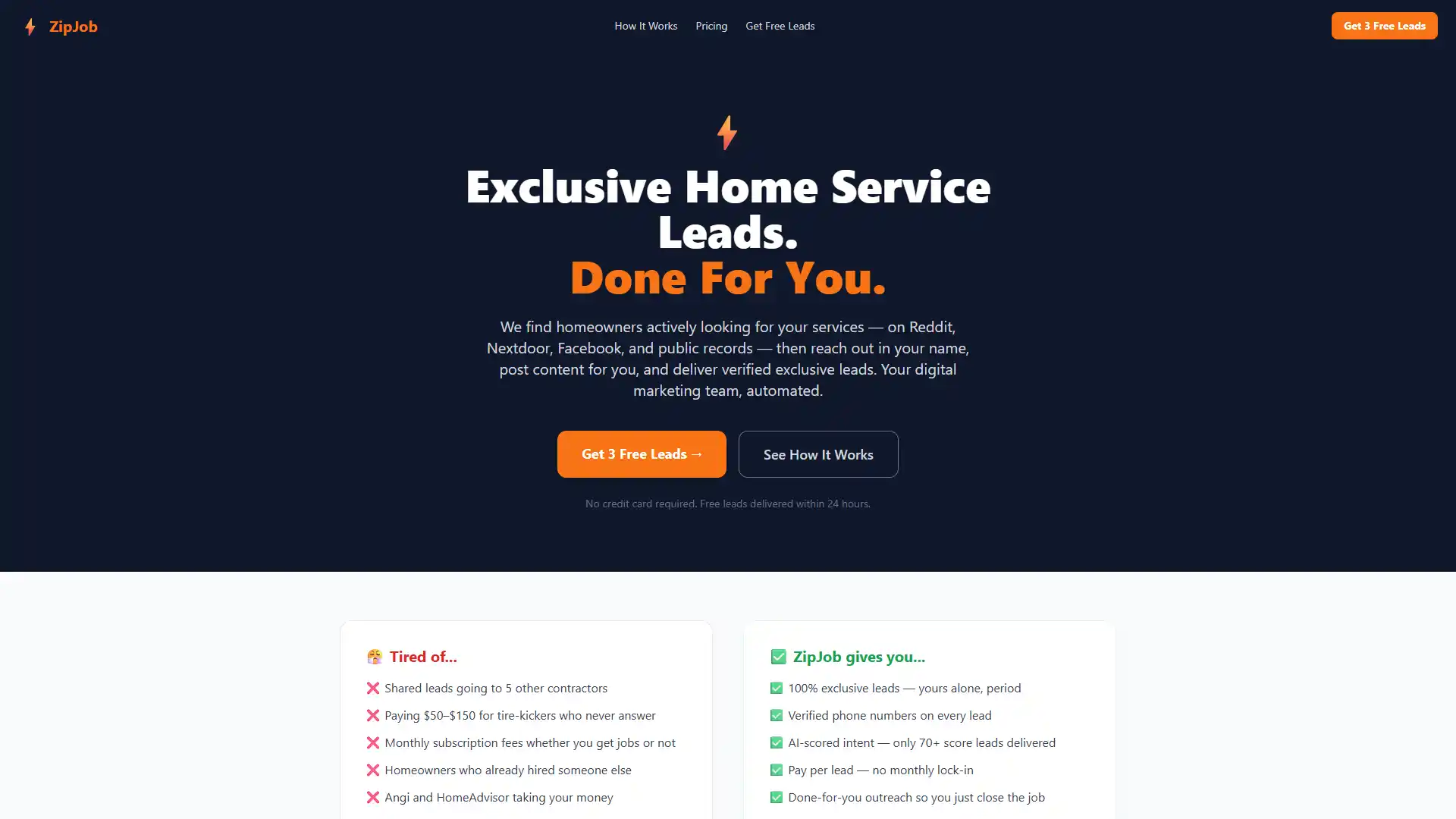
Company: Part of the Career.io Network, US-based.
The most expensive tool in this directory, and the only one offering genuine, standard human review alongside AI.
Best For
Anyone who wants a real person, not just an algorithm, involved in the final product.
Pricing
Starts around $139, priced per project rather than per month, the highest entry price in this entire list.
Key AI features: Algorithmic screening paired with professional human rewriting.
ATS optimization: Expert review guarantees compliance, backed by the algorithmic screening layer.
Unique advantage: A genuine AI-plus-human hybrid model, pairing algorithmic parsing with professional rewriting.
Pros
- The only tool here with actual human review built in as a standard part of the service, not an upsell.
Cons
- By far the most expensive option, and not a fit if you need to iterate quickly across many applications.
The Verdict
Worth the price specifically if this is for a high-stakes application (an executive search, a role you desperately want) and you want a human's judgment involved.
51. GoodSpace AI
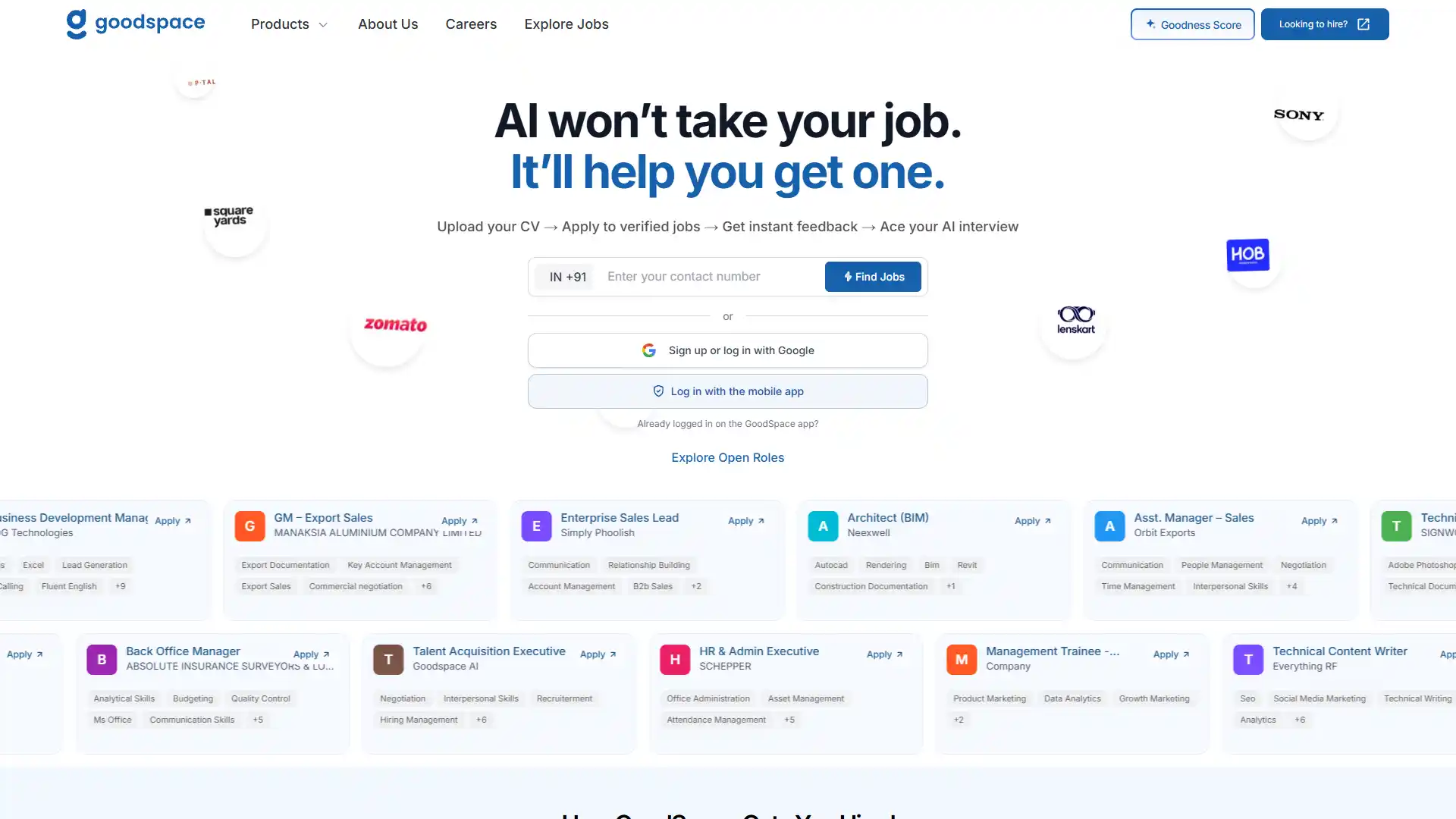
Company: GoodSpace, India and globally distributed, privately held.
Built around a very specific discipline: catching vague, unquantified resume claims before they go out the door.
Best For
Precision applicants who want a rigorous check on whether their bullet points actually contain measurable results.
Pricing
Free scan available, premium for full analysis.
Key AI features: Quantification analysis that flags clichéd, unquantified language.
ATS optimization: A 16-point critical ATS check.
Cover letter: Grammar evaluation included.
Job match: Flags keyword density gaps against a target job description.
Unique advantage: Explicitly penalizes ATS scores for bullet points lacking quantified metrics, a genuinely disciplined check.
Pros
- An emerging but genuinely useful analytical tool with a sharp, specific focus most competitors don't replicate.
Cons
- Newer tool, smaller track record than established analysis specialists like Jobscan.
The Verdict
A smart, focused free scan to run before you submit anything, specifically to catch vague language before a recruiter does.
Comparison tables
Pricing and ATS strength (top 15)
| Tool | Free plan | True monthly cost | Billing cycle trap? | ATS parse strength |
|---|---|---|---|---|
| Rezi | 1 resume, limited exports | $29 (or $149 lifetime) | No | Strong |
| Jobscan | 2 scans/mo | $49.95 | No | Highest (diagnostic) |
| Teal | Unlimited resumes | ~$29-39 | Weekly billing | Moderate |
| Kickresume | 1 resume, no AI | ~$19 | No | Weaker |
| Wobo | Unlimited | $34.99 | No | Strong |
| Enhancv | Limited, watermarked | $16-25 | No | Weakest |
| Resume.io | 1 resume, 3 downloads | ~$29.95 (or $149 lifetime) | Yes, 4-week cycle | Strong, no tailoring |
| Novoresume | 1 page | $19.99 | No | Moderate |
| OphyAI | Limited | Bundled | No | Strong (platform sims) |
| BeamJobs | Templates, limited AI | Premium | No | Strong |
| Resume Genius | TXT only | ~$24.95 | Yes, trial-to-sub | Basic |
| ResumeWorded | Limited checks | $49 (or $19 annual) | No | Strong (analysis) |
| Huntr | 100 jobs tracked | $40 | No | Moderate |
| Simplify Copilot | Free extension | $39.99 | No | N/A (autofill) |
| Careerflow.ai | Free tier | $12 | No | Moderate |
Free-plan honesty comparison (paywall-at-export check)
| No paywall trap at export | Paywall or watermark at export |
|---|---|
| Wobo, Reactive Resume, FlowCV, Indeed Resume Builder, ResumeAI, ResumeMaker.Online, Wix Resume Builder | Zety, Resume Genius, MyPerfectResume, Enhancv (watermark), Skillroads (watermark), Resumaker.ai |
Best AI resume builders by use case
Best for students and entry-level: Kickresume or Wobo.
Best for career changers: Enhancv, paired with a plain-text backup for ATS-heavy applications.
Best for tech and engineering roles: Rezi or BeamJobs.
Best for executives and senior leaders: Enhancv.
Best completely free option: Reactive Resume, FlowCV, ResumeAI, or Wobo's free tier.
Best for high-volume applying: Teal for tracking, Simplify Copilot, LoopCV, or FastApply for automation.
Best for diagnosing an existing resume: Jobscan or Jobalytics.
Best for international applicants: Novoresume, CVwizard, or Resumaker.ai.
Best for India-based applicants: CV Prime or ResumeGyani.
Best if you want a human involved: ZipJob for full hybrid service, Skillroads for a lighter touch.
Best for staffing agencies: AI Builder for Recruiters.
Best for educational institutions: Yotru.
Free vs. paid: is it actually worth paying?
Short answer: paying is worth it if you're applying to 15+ jobs and will actually use the tailoring features on every application; otherwise, a free tool is usually enough.
It depends on what's broken.
If your resume already exists and just isn't landing interviews, a free scan on Jobscan or Jobalytics might tell you everything you need without spending a dollar.
If you're starting from scratch and applying to 15+ jobs, a paid plan on Teal or Rezi pays for itself fast in saved time, assuming you actually use the tailoring features on every application.
If money's tight, Reactive Resume, FlowCV, ResumeAI, or Wobo's free tier will get you a genuinely ATS-safe resume without a credit card.
The pricing tricks to watch for
Trick #1: The 4-week billing cycle. Zety and Resume.io are named most often here. A "monthly" price billed every 4 weeks works out to 13 charges a year, not 12. A "$25.95/month" plan can quietly cost $337-390 over 12 months.
Trick #2: The cheap trial, expensive renewal. Trials priced at $1.95-2.90 for 14 days are common across the BOLD Limited family (Zety, Resume Genius, MyPerfectResume, ResumeHelp, LiveCareer) and Resumaker.ai. They auto-renew into $23-30/month unless you cancel manually. Set a calendar reminder the day you sign up.
Trick #3: The export paywall. You build a complete resume for free, then hit a paywall or watermark the second you try to download it. This is the single most common complaint pattern across the category.
The fix: Before you build anything, check the true annual cost, whether the download is free or paywalled, and whether billing is monthly or every 4 weeks.
What Reddit actually recommends (and why)
Short answer: Reddit's job-search communities most consistently recommend Reactive Resume and FlowCV, both free and open-source-friendly, over any paid tool.
Job-search communities on Reddit are unusually skeptical of paid "top" listicles, and honestly, they're right to be.
The consistent, repeated recommendation across r/resumes, r/jobs, and r/cscareerquestions is Reactive Resume or FlowCV: free, no credit card, no watermark, open-source-friendly. For technical roles specifically, a lot of engineers still swear by a plain single-column LaTeX template ("Jake's Resume").
There's also a recurring warning about AI-generated resumes reading as generic. The community's practical workaround: use AI for a first draft, then edit it yourself so it sounds like an actual human wrote it.
Should you just use ChatGPT or Claude instead?
Honestly? For parts of the job, yes.
General AI tools are genuinely good at rewriting a clunky bullet point, tightening your summary, or adjusting tone for a specific industry. If all you need is better wording, you don't need a monthly subscription for that.
Here's where a purpose-built tool still wins: ATS-safe formatting and export, and a built-in workflow for matching a resume against a specific job description automatically. A chatbot won't check whether a Workday parser is going to choke on your table formatting.
A simple approach that works well: draft your bullet points with ChatGPT or Claude using a prompt like "Rewrite this resume bullet using the STAR method, keep it under 20 words, and include a quantified result." Then run the final resume through a free ATS checker (Jobscan or Jobalytics both work) before you submit.
Are AI resume builders actually ATS-friendly? The real data
You've probably heard that "75% of resumes get rejected by ATS software." That statistic is close to 10 years old, traced back to a defunct startup's marketing pitch, and it's not how modern ATS platforms actually work.
Most recruiters do not configure automatic rejection. Most either reject manually after a human review, or use specific knockout questions (like a location or visa requirement) to filter candidates before a resume is even scored. ATS software is mostly built to rank and sort applicants, not silently delete them.
That said, formatting still matters. Single-column layouts parse more accurately than two-column, graphic-heavy designs. If a tool defaults to multi-column templates (Canva, Adobe Express, Wix, some Kickresume designs), that's a real risk, even if the "75% rejected" number itself is a myth.
Key takeaway: The danger isn't a hidden ATS trapdoor. It's a resume format a parser genuinely can't read. Fix the format, and the myth mostly stops mattering.
How to choose the right AI resume builder for you
1. Already have a resume and just want to know why it's not working? Jobscan or Jobalytics.
2. Starting from zero, applying to a lot of jobs? Teal's free tier, or Rezi if ATS strictness is your top concern.
3. Design-forward field (creative, marketing, executive)? Enhancv.
4. Applying internationally? Novoresume, CVwizard, or Resumaker.ai.
5. Just want free, no strings attached? Reactive Resume, FlowCV, or ResumeAI.
6. Want automation, not just a document? Huntr, Simplify Copilot, LoopCV, or FastApply.
7. Want a human involved somewhere? ZipJob or Skillroads.
Final recommendation
If you want one answer: start free. Try Teal or Wobo to build the resume, run it through Jobscan or Jobalytics to catch formatting issues, and only pay once you know exactly which feature is worth it to you.
There's no single "best" tool out of these 51. There's a best tool for your situation, and now you know which one that is.
Frequently Asked Questions
Quick answers to the most common questions from this article.
01Are AI resume builders worth it?
For most active job seekers applying to more than a handful of roles, yes, especially the free tiers on Teal, Wobo, Reactive Resume, or FlowCV. Paid plans are worth it if you're using the tailoring features on every application.
02Can AI write a resume from scratch?
Yes. Kickresume and Rezi can generate a full draft from just a job title and background details. It still needs a human edit pass to remove generic phrasing.
03Do employers know if you used AI to write your resume?
There's no reliable way for an employer to detect this directly. The real risk isn't detection, it's generic-sounding bullet points that read the same as everyone else's.
04Do ATS systems automatically reject resumes based on format?
Rarely, and only in extreme cases. Most rank and filter rather than silently auto-reject. The "75% instant rejection" claim is outdated.
05What's the best completely free AI resume builder?
Reactive Resume and FlowCV are the two most consistently recommended free options with no paywall at export. ResumeAI and Wobo's free tier are close behind.
06Is Zety or Resume.io worth the money?
Both parse cleanly but don't offer real job-specific tailoring, and both use billing patterns that inflate real annual cost. Worth it for speed and simplicity; check the true annual cost before committing.
07What's the difference between a resume builder and an ATS checker?
A builder (Teal, Rezi, Kickresume) helps you create the document. A checker (Jobscan, Jobalytics) analyzes a resume you already have against a job description.
08Should I use ChatGPT instead of a paid resume builder?
For rewriting bullet points or tightening your summary, general AI tools work fine. For ATS-safe export formatting and job-description matching built into the workflow, a dedicated tool still has the edge.
09Which tool is best for a career change?
Enhancv, paired with a plain-text version for ATS-heavy applications.
10Which tools should I be careful with?
Watch any tool using a sub-$3 trial that auto-renews (Zety, Resume Genius, MyPerfectResume, ResumeHelp, LiveCareer, Resumaker.ai). Not a reason to avoid them outright, but set a cancellation reminder the day you sign up.