




Back in 2017, I uploaded my first video to a channel called Rehanous using a secondhand phone and zero clue what I was doing.
Eight years, one copyright-strike channel loss, and 33,000 subscribers later, I've watched the "creator economy" go from a punchline influencers joked about to a $300 billion-plus industry with its own insurance market.
That's not a typo. It really does have an insurance market now. (Stat #81, if you want to skip ahead.)
I pulled together every credible 2026 number I could find on market size, creator earnings, AI adoption, platform performance, and burnout, then lined up all 81 of them on one page. No fluff, no recycled "did you know" filler you've already read on five other sites.
Here's everything you need to know about where the creator economy actually stands in 2026.
The Most Important Creator Economy Stats Right Now
If you only have 30 seconds, save yourself the scroll. Here are the numbers that matter most:
- Global creator economy market size 2026: $310.37B to $323.48B
- Projected market size by 2033: $1.34 trillion to $1.35 trillion
- Total creators worldwide: 200 million to 303 million
- Top 10% of creators capture: 62% of all creator payments
- Median creator income: $3,000 a year (average is $11,400, which tells you everything)
- Brand sponsorships still make up: 68.8% to 70% of creator income
- Influencer marketing industry size 2026: $32.6 billion
- Average influencer marketing ROI: $5.78 per $1 spent
- Creators using generative AI: 86%
- Creators reporting chronic burnout: 62%
- US creator ad spend 2026: $43.9 billion
- Global social commerce revenue 2026: $1.09 trillion
Now let's go deep on all 81.
Global creator economy value in 2026.
Forecast market value by 2033–2035.
Share of all creator payments captured by the top 10%.
Median annual creator earnings (average is $11,400).
A Quick Note on the Numbers (Methodology)
Quick honest caveat before you start quoting these in a deck. Creator economy "market size" gets calculated differently by every firm that publishes a number, which is why you'll see ranges instead of one clean figure throughout this piece.
I cross-referenced 2026 market research, platform-disclosed earnings data (YouTube, TikTok), and analyst projections including Goldman Sachs Research, rather than picking whichever number looked the most dramatic. Where two credible estimates disagree, I show both.
Creator Economy Market Size and Growth Statistics
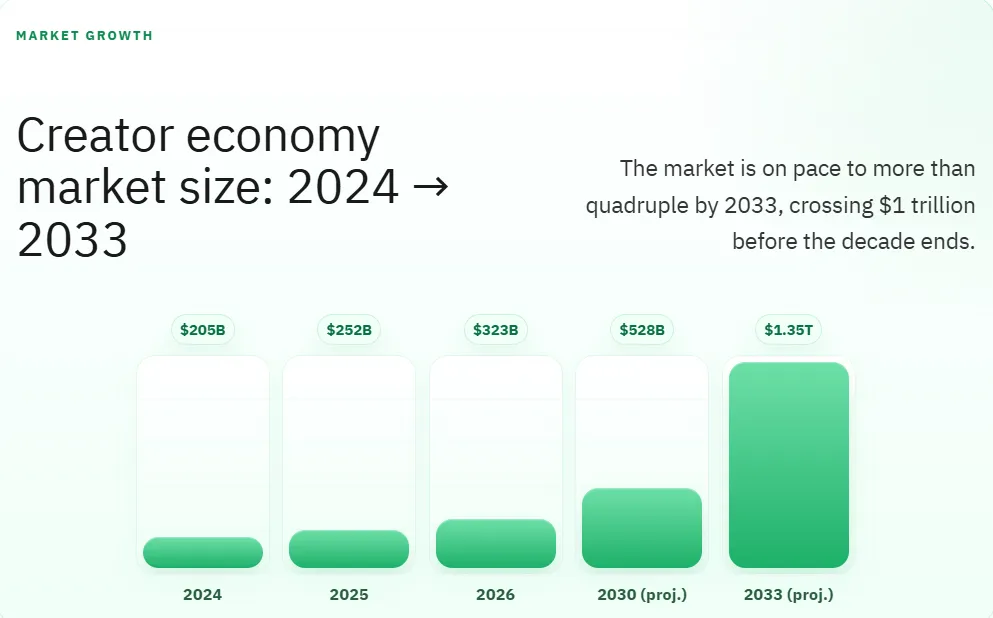
1. The global creator economy is worth $310.37 billion to $323.48 billion in 2026, up from $252.33 billion in 2025 and $205.25 billion in 2024.
2. The market is growing at a 22.4% to 26.5% compound annual growth rate (CAGR) from 2025 through 2033.
3. Total market value is projected to cross $528.39 billion by 2030.
4. Long range, the creator economy is forecast to hit $1.34 trillion to $1.35 trillion by 2033 to 2035.
5. Goldman Sachs Research puts the creator economy's total addressable market at $480 billion by 2027, roughly double its $250 billion size in 2023.
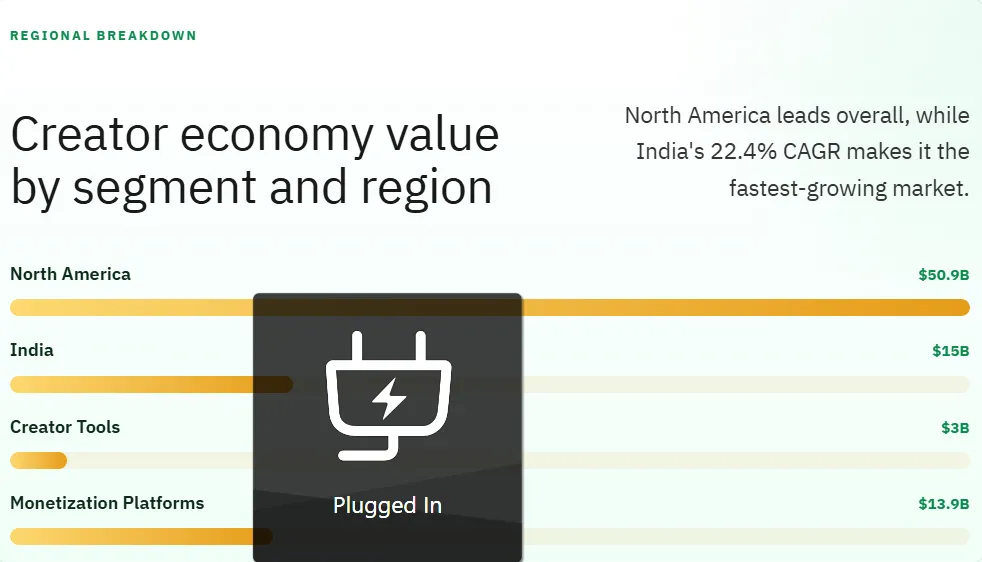
6. The creator monetization platform market (think Patreon, Substack, Kajabi) is worth $13.94 billion in 2026, up 20.5% year over year from $11.57 billion in 2025.
7. The creator tools market sits at $698.9 million in 2026.
8. The creator project management software market hit $3.05 billion in 2025. Creators aren't just posting anymore. They're running actual back-office operations.
9. North America still leads the world with 33.2% to 40% of total market share, worth roughly $43.48 billion to $50.9 billion.
10. US creator ad spend hits $43.9 billion in 2026, more than double the $21.1 billion spent in 2023.
Creator Economy Stats by Region
11. Asia-Pacific is the fastest growing region in the creator economy, driven by cheap mobile data and surging demand for vernacular, local-language content.
12. India's creator economy is worth $15.03 billion in 2026.
13. India is projected to hit $61.87 billion by 2033, growing at a 22.4% CAGR, faster than almost every other major market on this list.
14. Indian creators already influence more than $350 billion in consumer spending every single year.
15. That number is expected to cross $1 trillion by 2030.
Creator Demographics: Who Are the World's Creators?
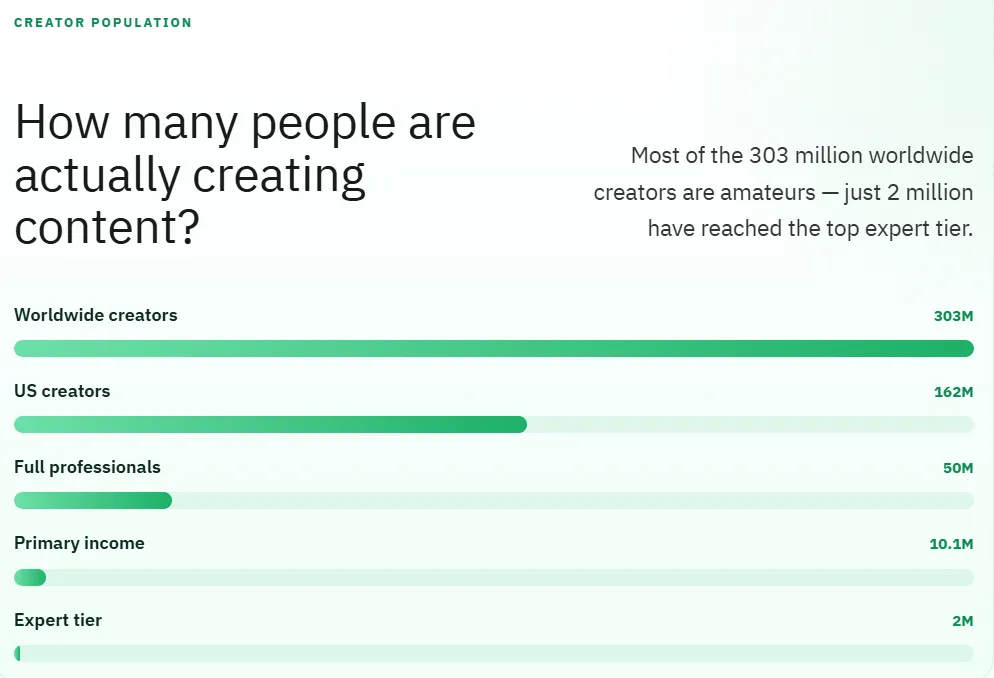
16. Somewhere between 200 million and 303 million people worldwide now identify as content creators.
17. About 1 in 40 people globally call themselves a creator. In heavily online developed markets, that ratio climbs to 1 in 4.
18. Roughly 50 million creators operate as full professionals, generating consistent income from their content.
19. Just over 2 million creators have reached "expert" status, the highest earning tier in the industry.
20. The global creator population is projected to surpass 1.1 billion by 2032 as AI keeps lowering the technical barrier to making content.
21. The US alone has 162 million creators.
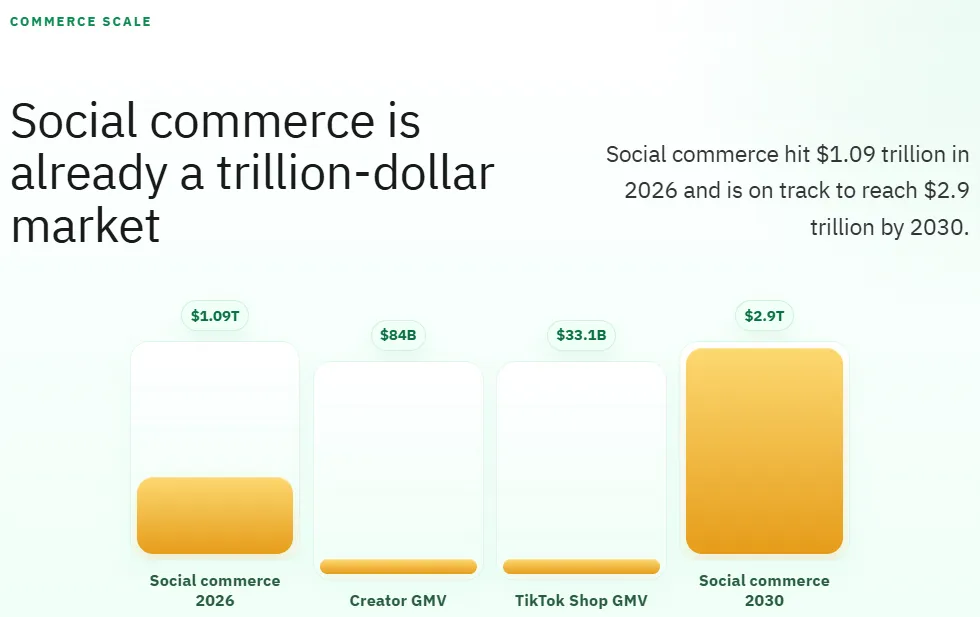
22. Of those, 45 million are professionals.
23. And 10.1 million Americans earn their primary income from content creation, not a side hustle.
24. Millennials make up the largest creator demographic at 42%, ahead of Gen X at 30%. Gen Z sits at 14% to 30%, but it's the fastest growing cohort by far, especially on short-form video.
Full-Time vs Part-Time Creator Statistics
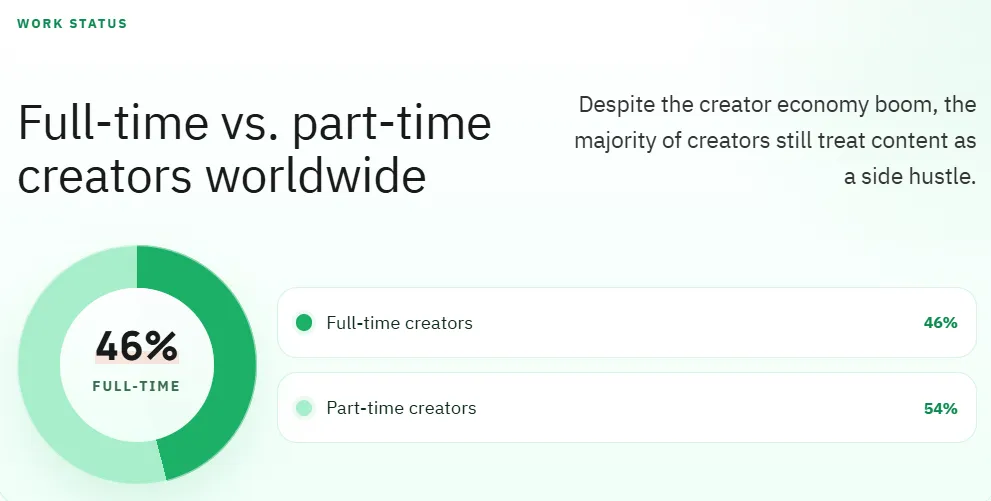
25. Only 46% of creators worldwide treat content creation as a full-time job.
26. In the US specifically, 44% of paid creators work full-time, 32% part-time, and 24% call it a hobby.
27. 66% of creators globally are still part-time. 36% of all creators spend just 1 to 5 hours a week on content.
28. Only 5% of all creators put in more than 40 hours a week.
29. 63% of part-time creators expect to go full-time within the next two to three years.
30. 55% of monetizing creators now identify as full-time, up 3 points from 2023, and they're putting in 20-plus hours a week on content and admin combined.
Creator Earnings and Income Distribution Statistics
This is the section that actually matters if you're trying to build a real income from this, not just chase follower counts.
31. The top 10% of creators capture 62% of all creator payments globally, up sharply from 53% in 2023.
32. The top 1% alone pulls in anywhere from 21% to 60% of total market revenue depending on the analytical model used.
33. Average creator earnings in 2025 came out to $11,400 a year.
34. The median, though, was just $3,000. That gap is the entire story of this industry in one line.
35. 68% of creators earned less than $50,000 in 2025.
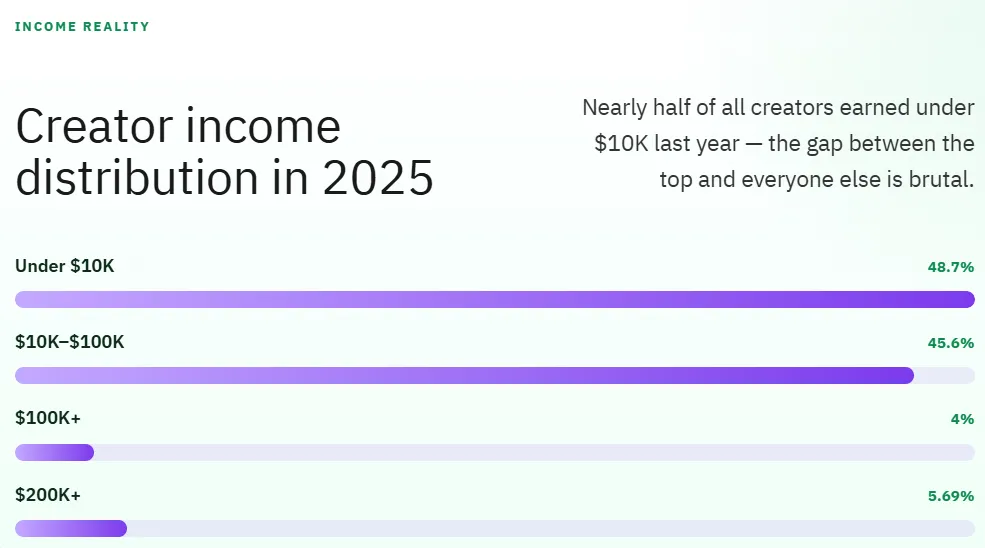
36. 48.7% earned under $10,000 for the whole year.
37. Only 4% of creators clear $100,000 annually, down hard from 10% in 2022.
38. Just 5.69% earned over $200,000 in 2025, a 21% drop from 7.2% in 2023.
39. 45.6% of creators now sit in the $10,000 to $100,000 bracket, the "creator middle class." A real middle tier is forming, even if the top stays brutal.
40. Full-time US creators have a median income of $76,000, while the average income for the top 1% of creators sits at $1.2 million.
How Creators Make Money: Monetization Statistics
41. Nearly 60% of creators now describe themselves as entrepreneurs first, not influencers.
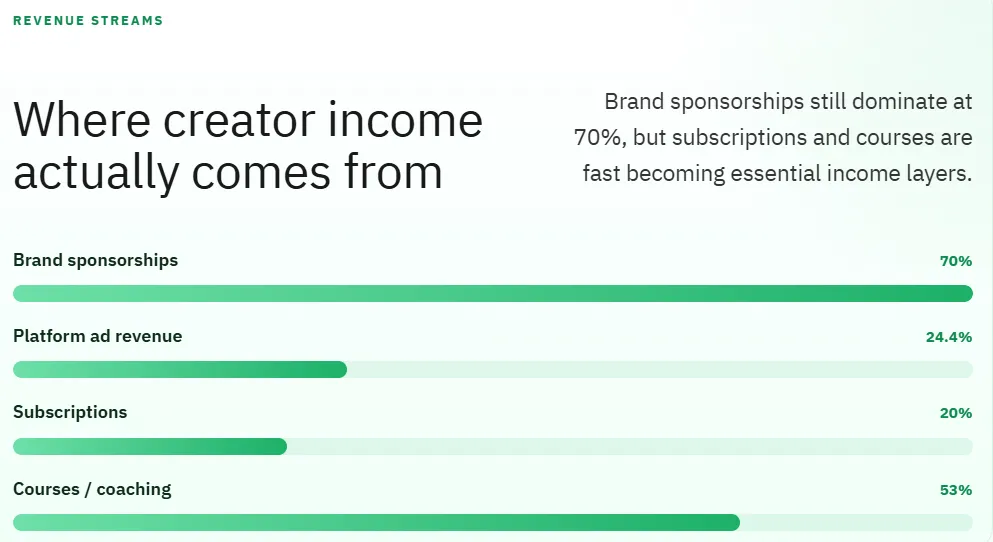
42. Brand sponsorships still make up 68.8% to 70% of total creator income. Whatever you've heard about brand deals dying, the data says otherwise.
43. Platform ad revenue accounts for 22.1% to 24.4% of creator earnings.
44. Subscriptions (Patreon, Substack, paid memberships) bring in 20% of total creator income.
45. Creators running 3 or more revenue streams earn $75,000 more a year than creators stuck on a single channel.
46. Full-time creators now run an average of 4.3 revenue streams at once.
47. 88% of community-building creators monetize through paid memberships, up from 54% a few years ago.
48. 32.9% of paid creator communities charge between $26 and $50 a month.
49. 53% of creators sell courses, 51% offer coaching or services, and 37% sell digital products.
Social Commerce and Direct-to-Consumer Statistics
50. 38% of top-tier creator revenue now comes from direct commerce instead of brand deals or platform ad share.
51. Creator-influenced social commerce drives an estimated $84 billion in gross merchandise value.
52. Creators who can prove closed-loop sales attribution charge a 2.1x pricing premium over creators selling pure awareness and reach.
53. Global social commerce revenue hit $1.09 trillion in 2026, up 28% year over year.
54. It's on track to reach $2.9 trillion by 2030, taking 19.4% of all eCommerce.
55. Purchases made through native in-app checkout convert at 2.8% to 3.1%. Links that redirect off-platform convert at only 1.7%. If your link sends people off the app, you're losing sales before they even land on the page.
Influencer Marketing Spend and ROI Statistics
56. The global influencer marketing industry is worth $32.55 billion to $32.6 billion in 2026, a 19x jump from $1.7 billion back in 2016.
57. It's projected to reach $52.1 billion by 2030 at a 16.4% CAGR.
58. US influencer marketing spend alone hits $12.17 billion in 2026.
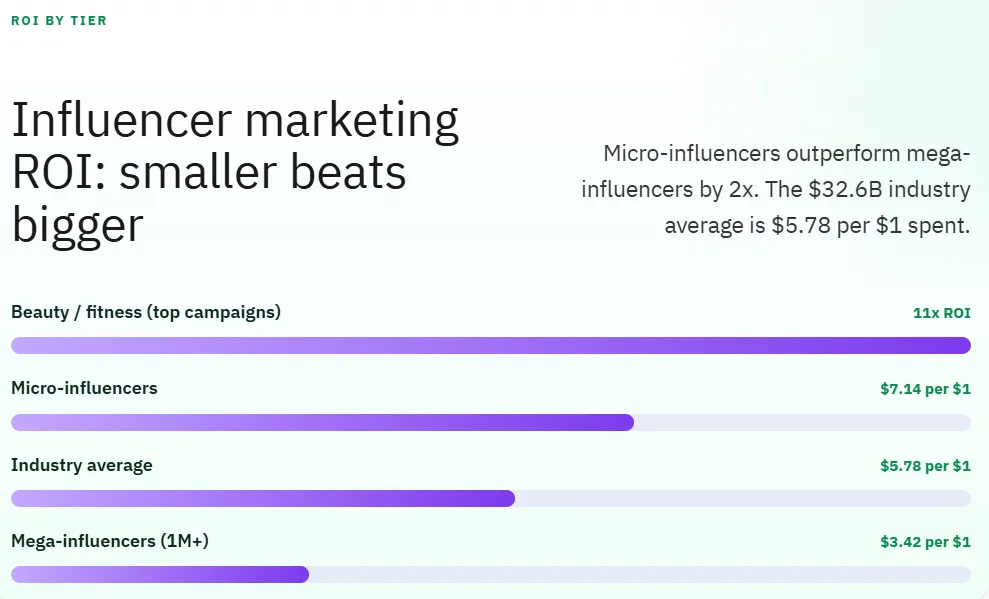
59. The average ROI across platforms and influencer tiers is $5.78 for every $1 spent.
60. Top performing campaigns in beauty and fitness push that as high as 11x.
61. 82% of marketers now run a dedicated influencer marketing budget, averaging 17.4% of total marketing spend.
62. 86% of consumers make at least one influencer-inspired purchase every year.
63. 72% of consumers say they trust influencer recommendations over regular brand advertising.
64. Micro-influencers (10,000 to 100,000 followers) return $7.14 for every $1 spent. Mega-influencers (1M+ followers) only return $3.42. Bigger isn't better here. It's the opposite.
65. Influencer fraud, fake followers, and bot engagement cost the industry an estimated $1.3 billion a year.
Platform Statistics: TikTok, Instagram, YouTube, and LinkedIn
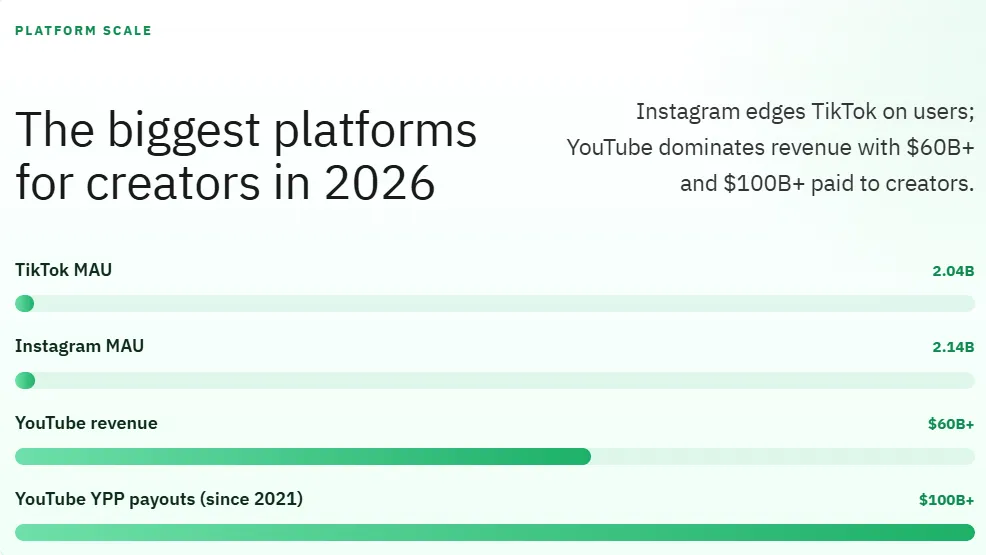
66. TikTok has 2.04 billion global monthly active users who spend an average of 95 minutes a day on the app.
67. TikTok Shop generated $33.1 billion in GMV in 2026, and it's heading toward $44.8 billion.
68. Instagram has 2.14 billion monthly active users, and Reels now account for 38% of all time spent on the app.
69. Instagram Reels get 67% higher engagement than regular static feed posts.
70. YouTube generated more than $60 billion in total revenue in 2025.
71. YouTube has paid out over $100 billion to creators and media partners since 2021 through the YouTube Partner Program.
72. YouTube Shorts now pulls 70 billion daily views and makes up 22% of YouTube's total ad revenue.
73. LinkedIn has 1.12 billion members, including 65 million executive decision-makers, and it drives 80% of all B2B leads sourced from social media.
B2B Influencer Marketing Statistics
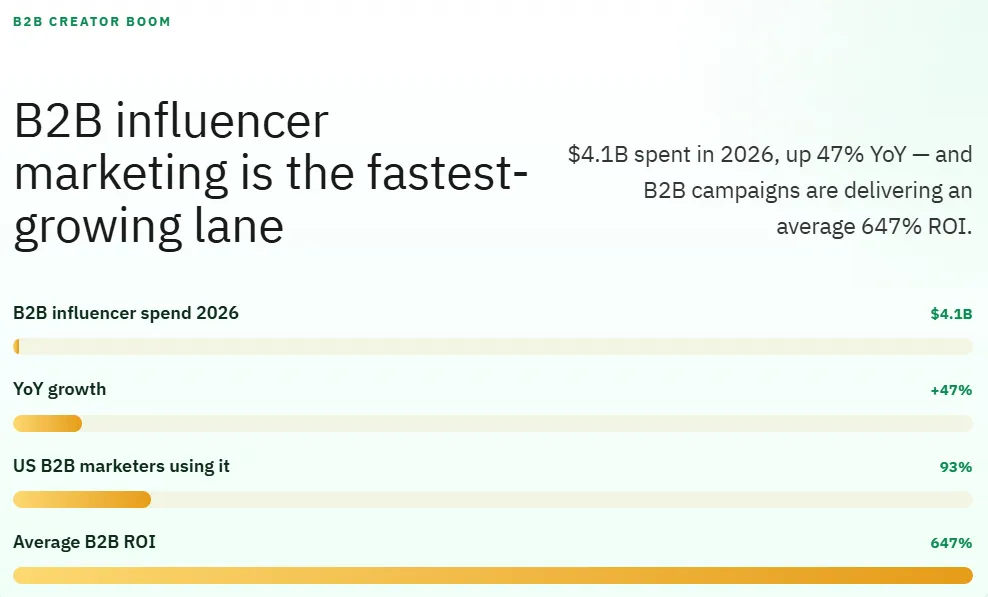
74. B2B influencer marketing spend hit $4.1 billion in 2026, up 47% year over year. It's the fastest growing lane in the entire industry right now.
75. 93% of US B2B marketers now use influencer marketing, up from 85%.
76. B2B influencer campaigns deliver an average ROI of 647% with sectors like cybersecurity and enterprise SaaS seeing $8.20 in pipeline revenue for every $1 spent.
AI and Virtual Influencer Statistics
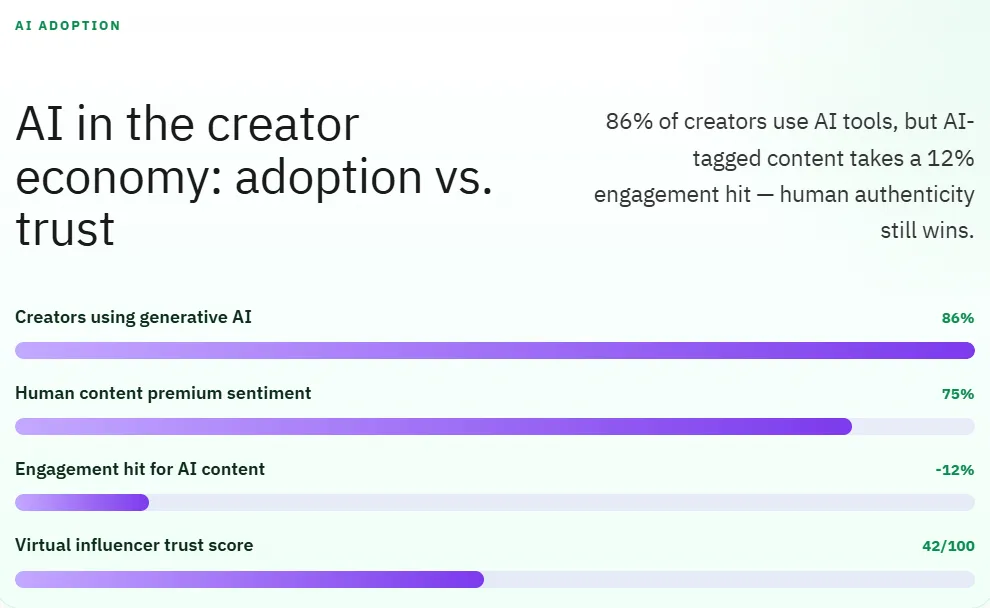
77. 86% of creators now actively use generative AI tools somewhere in their workflow, mostly for ideation and planning, not full content production.
78. 75% of creators say authentic, human-made content now commands a real premium in the market. Content tagged as purely AI-generated takes a 12% engagement hit on average.
79. Virtual influencers (CGI personas) hold only 4.2% of total influencer spend, about $1.37 billion, and score just 42 out of 100 on consumer trust compared to 73 out of 100 for human creators. People still want a real person on the other side of the screen.
Creator Burnout and Mental Health Statistics
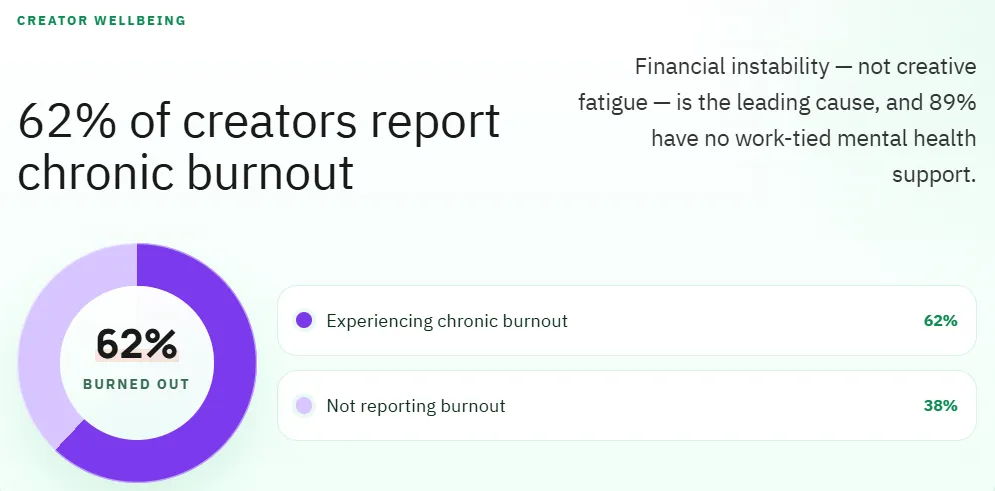
80. 62% of creators report chronic burnout, and 55% point to financial instability, not creative fatigue or screen time, as the main cause.
81. 89% of creators have no access to mental health support tied to their work. That gap is exactly why the creator economy insurance market is scaling to $2.11 billion in 2026, up at a 22.6% CAGR.
A quick aside here, because this isn't a throwaway stat. If burnout or money stress from content work is actually weighing on you right now, talk to a real person about it, not just your analytics dashboard. It's a sensitive topic and worth treating like one.
Final Word
That's 81 numbers. If you only remember three, remember these: the market's bigger than it's ever been, the gap between the top 10% and everyone else is getting worse, not better, and "authentically human" is quietly becoming the highest value asset a creator owns.